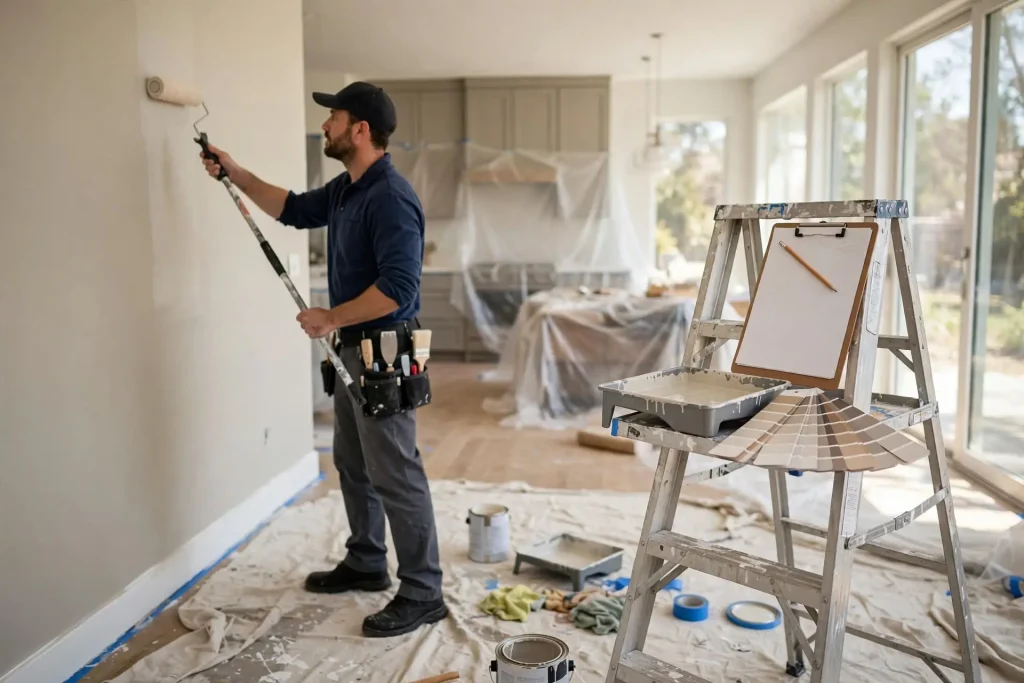
Paint feels like the simple part of a renovation until the estimate arrives, and then the whole house painting cost during renovation surprises a lot of homeowners. The number lands higher than a weekend of do-it-yourself painting suggests it should, and the reason has almost nothing to do with the paint itself. Painting during a renovation is a different job than repainting a lived-in room, because it involves new drywall that has to be primed correctly, patched transitions between old and new surfaces, fresh trim that needs preparation, and a construction environment where dust and sequencing shape the result. This guide breaks down what drives the cost, where the money actually goes, how to budget for it inside a larger renovation, what the work runs in the Central Illinois market, and how to tell a fair painting quote from a padded one. Read it before you assume paint is the place to cut.
The Problem: Renovation Painting Is Priced Like a Trade, Not a Chore
Homeowners anchor their expectations to the cost of a can of paint and a free Saturday, and that anchor is the source of the sticker shock. Professional renovation painting is a skilled trade with material, labor, and preparation costs that the weekend-project mental model never accounts for. New drywall alone changes the math, because bare gypsum and joint compound absorb paint unevenly and must be sealed with a dedicated primer before any color goes on, which adds a full coat across every new surface in the house.
The bigger driver is labor, which makes up the majority of any professional painting cost. Preparation consumes most of that labor, including sanding, patching, caulking, taping, and protecting floors and fixtures, and the painting itself is the fast part at the end. A renovation adds even more preparation, since new and old surfaces meet at seams that need feathering, and construction dust must be controlled so it does not settle into wet paint. Understood as a trade rather than a chore, the cost stops being a surprise and becomes a line item worth budgeting honestly.
What Actually Drives Whole House Painting Cost
Several factors move the number, and knowing them lets homeowners read a quote instead of just reacting to it.
Square Footage & Ceiling Height
Painters price by the surface area they cover, which means wall square footage rather than floor square footage, so tall ceilings and open two-story spaces raise the cost even when the floor plan is modest. Stairwells and vaulted rooms add both area and the equipment needed to reach it safely.
New Drywall Versus Existing Walls
New drywall requires a primer coat before the finish coats, adding material and labor across every fresh surface. A renovation that opened many walls carries more of this cost than one that mostly refreshed existing surfaces, which is why the painting line scales with how much of the house was taken back to studs.
Scope of Surfaces
Walls are the baseline, and every added surface raises the price. Ceilings add substantial area, trim and doors require detailed brushwork that is slow by nature, and painted cabinetry is a specialty within the specialty, sprayed for a smooth finish and priced accordingly. A quote for walls only and a quote for walls, ceilings, trim, doors, and closets describe two different projects.
Prep Condition & Color Changes
Smooth, sound surfaces prime and paint quickly, while damaged walls, heavy texture, or dramatic color changes add coats and labor. Covering a dark wall with a light color, or the reverse, often requires an extra coat that a same-tone repaint would skip.
Paint Quality
Better paint costs more per gallon and covers better, lasts longer, and cleans more easily, which usually makes it the economical choice over the life of the finish. On a whole-house project the material difference between builder-grade and premium paint is real but still smaller than the labor, so upgrading the paint rarely moves the total as much as homeowners fear.
Where the Money Goes on a Renovation Paint Job
The cost breakdown surprises people because labor and preparation dominate it. On a typical professional job, material accounts for roughly fifteen to twenty-five percent of the total, and labor accounts for the rest, with preparation consuming the largest share of that labor. This is why the cheapest painting quote is so often the one that is skimped on preparation, since prep is the invisible line that a low bid quietly shortens.
The renovation context adds specific line items worth seeing. Priming new drywall is its own coat across new surfaces. Protecting new floors, new cabinets, and finished areas takes time and materials. Sequencing around other trades, so painting lands after drywall and before or between finish installations, adds coordination. Touch-up work at the end, after the last trade leaves and the inevitable scuffs appear, is part of a complete job rather than an extra. A quote that includes touch-ups and cleanup describes finished work, and a quote that ends at the final coat describes something less.
How to Budget Painting Inside a Renovation
Painting sits near the end of a renovation, which tempts homeowners into treating it as the flexible line when earlier phases run long. The better approach budgets it honestly from the start, because paint is the finish everyone sees every day and the surface that shows every shortcut.
Get the painting scope defined early, listing exactly which surfaces are included, walls, ceilings, trim, doors, closets, and any cabinetry, so the quote covers the real project. Decide on paint quality upfront, leaning toward washable finishes in kitchens, baths, and hallways where cleaning matters most. Build touch-up and cleanup into the expectation rather than treating them as add-ons. And keep labeled leftover paint from every color, because a renovated house settles in its first year, hairline cracks appear at some seams, and touch-ups are far easier with the original paint on hand.
What Whole House Painting Costs in Central Illinois
The table below reflects installed professional pricing in the local market for common whole-house painting scopes during a renovation. Local costs run below the national figures homeowners find online.
| Painting Scope | Typical Cost Range | Notes |
| Walls only, 2,000 sq ft home | $3,500 to $7,000 | Two coats over primed or sound walls |
| Walls & ceilings, 2,000 sq ft | $5,000 to $9,500 | Ceilings add significant area |
| Walls, ceilings, trim, & doors | $7,000 to $13,000 | Detailed brushwork raises labor |
| New drywall prime & paint | $2 to $4 per sq ft of wall | Renovation standard, includes primer |
| Interior trim & door package | $250 to $600 per room | Caulk, prime, two enamel coats |
| Cabinet painting, full kitchen | $3,000 to $7,000 | Sprayed finish, doors removed |
| Premium paint upgrade | 10 to 20 percent of material | Small share of total, worth it |
| Touch-up & cleanup phase | Included in complete quotes | A sign of a finished job |
A whole-house interior paint job during a renovation commonly lands between 5,000 and 12,000 dollars depending on how many surfaces are included and how much new drywall the project created. The figure is a fraction of most renovation budgets, which is worth remembering when the temptation to cut it appears.
Frequently Asked Questions
Why does professional painting cost so much more than doing it myself?
The gap is labor and preparation, which make up the large majority of a professional quote. Sanding, patching, caulking, taping, priming new drywall, protecting floors and fixtures, and applying even coats take skilled time, and the painting itself is the fast final step. The paint in the can is a small part of the cost.
How much does it cost to paint a whole house during a renovation?
In the Central Illinois market, a whole-house interior paint job during renovation typically runs 5,000 to 12,000 dollars, depending on how many surfaces are included and how much new drywall was created. Walls-only jobs sit at the lower end, and jobs including ceilings, trim, doors, and cabinetry reach the higher end.
Do new drywall walls really need a separate primer coat?
Yes. New drywall and joint compound absorb paint at different rates, and finish paint applied directly shows every seam and patch under angled light. A dedicated drywall primer equalizes the surface so the color lays down evenly, and skipping it is the most common cause of blotchy new walls.
Is expensive paint worth it in a whole house project?
Usually, since premium paint covers better, lasts longer, and cleans more easily, which lowers cost over the life of the finish. On a whole-house job the material upgrade is a small share of the total, so the better paint rarely moves the overall number much while improving the result noticeably.
When should painting happen during a renovation?
Painting follows drywall and priming and comes before or between the finish installations, with a touch-up pass at the very end after other trades finish. Priming and first coats often go on before flooring, and final coats and trim work follow, which protects new floors from the messiest stages.
Can I save money by painting some rooms myself?
Sometimes, the honest answer depends on the surfaces. Painting bedrooms and closets with sound existing walls is within reach for a careful homeowner, and doing those rooms yourself can trim the professional scope. New drywall, ceilings, trim, and cabinetry are where professional preparation and equipment show most, so those are the surfaces worth leaving to the crew even when the budget is tight. Splitting the work this way keeps the visible, difficult surfaces professional while saving on the straightforward ones.
Related Reading & Services
Paint Is the Finish Everyone Sees
Whole house painting cost during a renovation reflects the trade it actually is, with skilled preparation and labor carrying most of the number and the paint itself carrying little of it. Budget it honestly, define the surfaces upfront, and resist cutting the line that produces the finish your family looks at every day. If you are planning a renovation in Pekin, East Peoria, Morton, Washington, or the surrounding Central Illinois area, our team handles drywall, priming, and painting as one continuous standard, with the preparation that makes the finish last. Request your free estimate or call (309) 241-9593 to price your painting scope honestly.