We Bring Damaged Properties Back to Their Original Condition
Storms, burst pipes, and house fires damage homes across Central Illinois every year. When damage happens, homeowners need two things: fast emergency response and a contractor who can take the home all the way back to its pre-loss condition. Pre-loss condition means the state your home was in before the damage occurred.
Grace Built Construction LLC provides home restoration services in Pekin, IL and surrounding communities. Our office is at 2416 Court St, Pekin, IL 61554. We handle emergency mitigation, structural repairs, and complete rebuilds. We also document everything your insurance company needs for your claim.
If your home has storm, water, or fire damage right now, call (309) 241-9593 for emergency restoration response.
When your home is damaged, fast action limits the loss. Grace Built Construction responds to restoration emergencies in Pekin, Peoria, East Peoria, Creve Coeur, Washington, Tremont, Morton, and throughout Tazewell County. Call (309) 241-9593 as soon as the property is safe.
Make sure everyone is safe first, then stop the source of damage if you can do so safely. Shut off the main water valve for plumbing leaks. Stay out of rooms with sagging ceilings or standing water near electrical outlets. Then call a restoration contractor and your insurance company.
Safety comes before property. Do not enter areas with structural damage. Do not touch electrical panels or wiring in wet areas. If you smell gas, leave the house and call the gas company from outside.
Once the home is safe, document the damage before you clean anything up. Take photos and video of every affected room. Capture wide shots and close-ups. Save damaged materials until your insurance adjuster has seen them. This documentation directly affects your claim.
Next, prevent further damage. Mitigation means taking reasonable steps to stop damage from getting worse. Examples include placing a tarp over a damaged roof section, boarding a broken window, or moving undamaged belongings out of a wet room. Most insurance policies require homeowners to mitigate. Keep receipts for any emergency supplies or services.
There are also things you should not do. Do not use household vacuums on standing water. Do not turn on ceiling fixtures in rooms with water intrusion. Do not throw away damaged items before the adjuster documents them. Do not sign contracts with door-to-door contractors who appear after a storm before you have verified their identity and credentials.
If the damage makes your home unlivable, ask your insurer about additional living expenses coverage. Many policies cover temporary housing and meals during covered repairs. Keep every receipt. These costs are part of your claim, but only documented expenses get reimbursed.
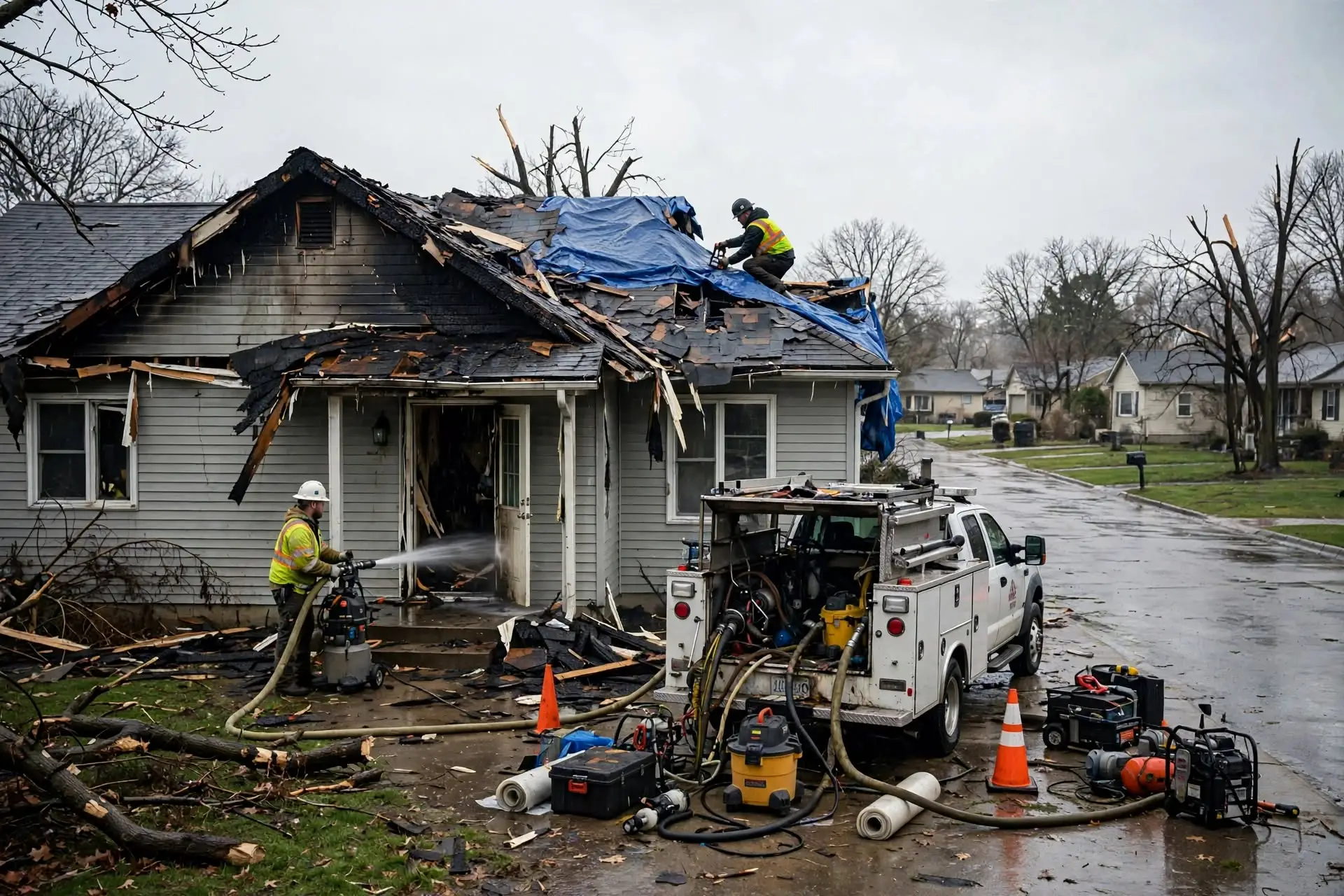
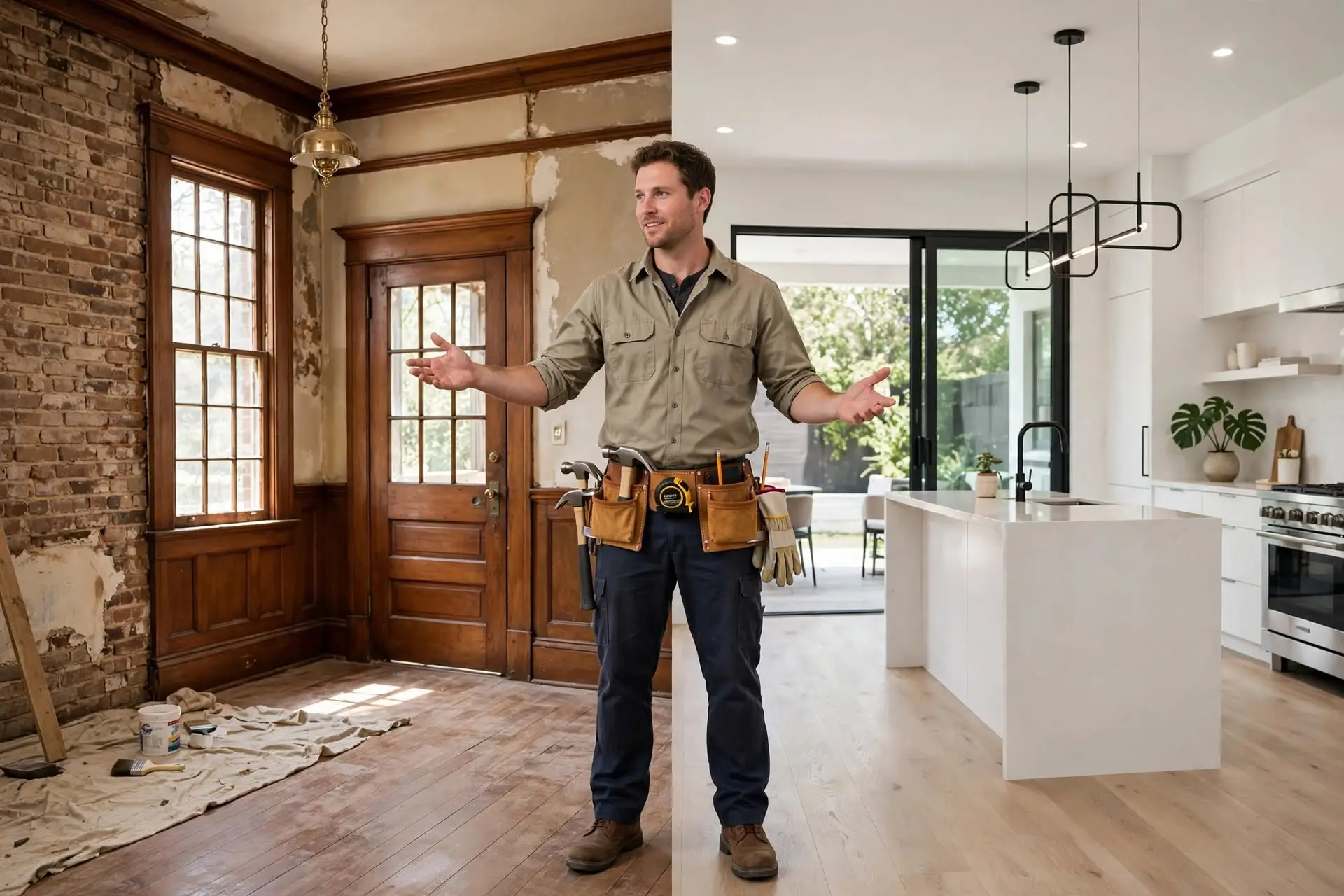
Restoration returns your home to the condition it was in before the damage occurred. Remodeling changes or upgrades your home beyond its original state. The distinction matters because homeowner’s insurance typically covers restoration to pre-loss condition, not upgrades.
Here is a practical example. A kitchen fire damages cabinets, drywall, and flooring. Restoration replaces those items with comparable materials. Remodeling would mean changing the layout, adding an island, or upgrading to premium finishes at the same time.
Many homeowners combine the two. After the insurance-covered restoration scope is defined, you can choose to upgrade selected materials and pay the difference out of pocket. This is common with flooring, fixtures, and paint colors. Grace Built handles both sides: we complete the restoration scope and we can fold upgrade work into the same project.
One caution: do not start demolition or repairs before your adjuster documents the damage, unless emergency mitigation requires it. Premature demolition can reduce your claim payment.
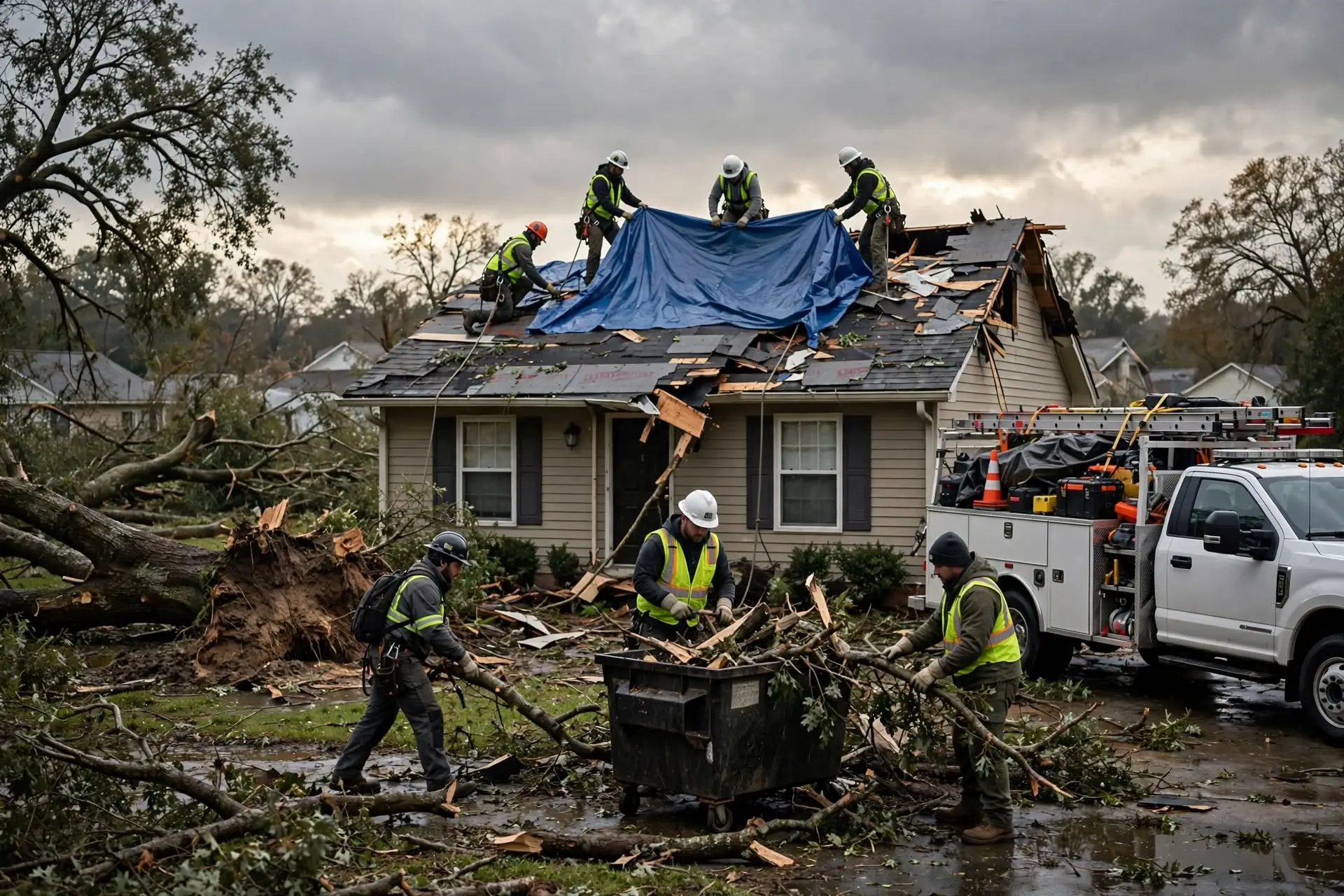
Storm damage restoration starts with emergency mitigation, continues with a full assessment, and finishes with permanent repairs. Typical storm repairs in Central Illinois include roofing, siding, gutters, and windows. We document the damage for your insurance claim at every stage.
Emergency mitigation comes first. A wind-damaged roof gets a secured tarp. A broken window gets boarded. A tree-damaged section of siding gets covered. These steps keep rain and pests out while the claim moves forward.
The assessment follows. We inspect the roof for missing or lifted shingles, damaged flashing, and punctures. We check siding for cracks, holes, and loose panels. We examine windows for broken glass and damaged frames. We look at gutters and downspouts for detachment and dents. Hail damage can be subtle, so we inspect closely and photograph everything.
Permanent repairs come after the insurance scope is approved. Roof repairs range from replacing individual shingles to partial re-decking. Siding repairs match the existing profile and color as closely as possible. Window replacement restores both function and energy performance. Gutter repair or replacement protects the foundation from future water problems.
Wind and hail cause different damage patterns. Wind lifts and tears shingles at edges and ridges. Hail bruises shingles and dents metal vents, gutters, and siding. Hail damage is easy to miss from the ground, which is why close-up inspection matters. Matching existing materials is a real challenge with older roofs and discontinued siding lines. We source the closest available match and discuss options with you before ordering. When a full slope cannot be matched, the insurance scope may cover a larger section — this is a common point of discussion with adjusters, and our documentation supports it.
For a detailed look at how storm claims work locally, read our guide on storm damage insurance restoration in Pekin.
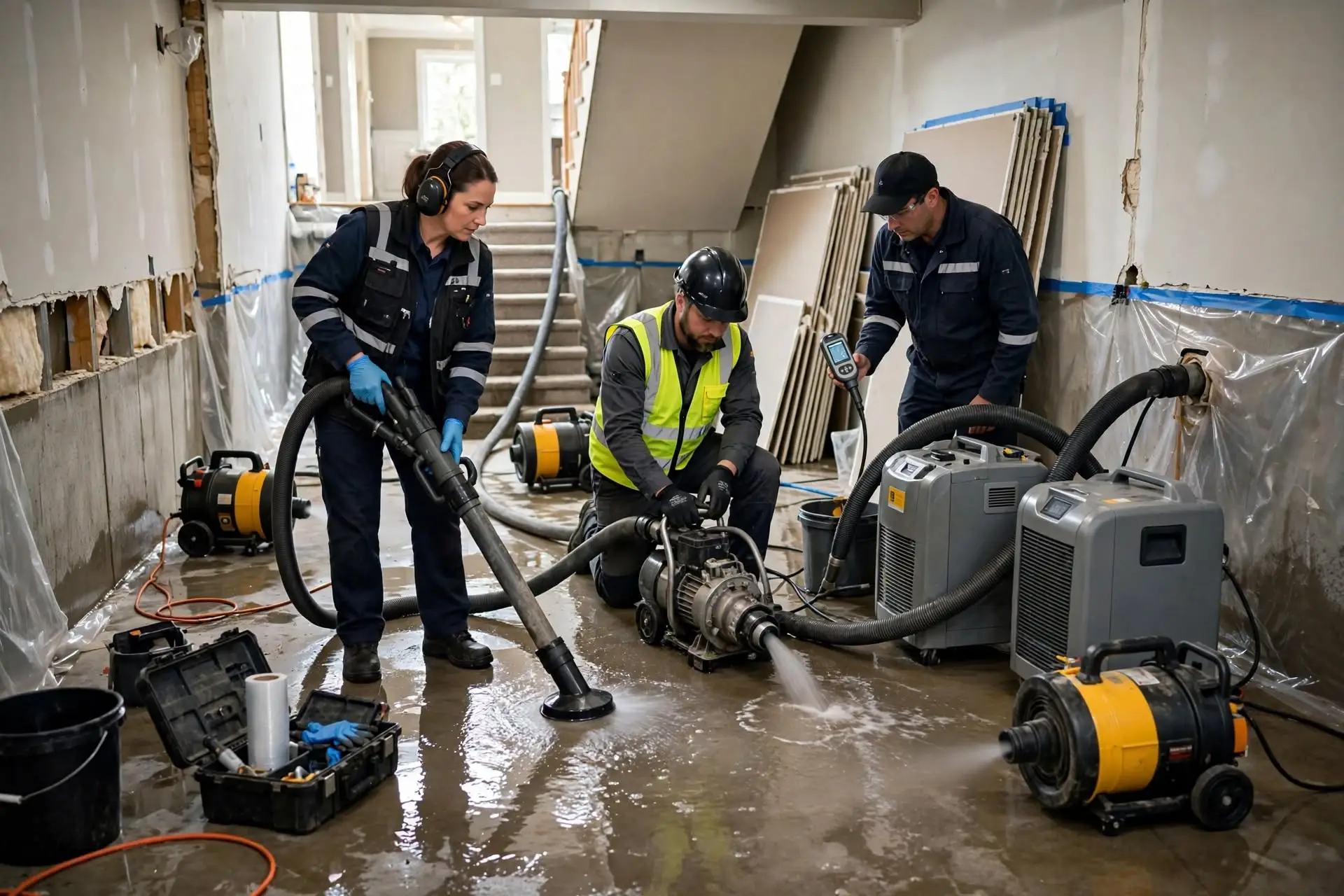
Water damage restoration involves water extraction, structural drying with commercial equipment, moisture monitoring, and mold prevention. The goal is to dry the structure completely before rebuilding damaged drywall, flooring, and trim. Skipping the drying step leads to mold and rot inside walls.
The process starts with finding and stopping the water source. Common sources in Central Illinois homes include burst supply lines, failed sump pumps, appliance leaks, and foundation seepage during heavy rain. Until the source is stopped, drying cannot begin.
Extraction removes standing water. Pumps handle deep water. Wet vacuums handle shallow water. Fast extraction shortens drying time and reduces damage to flooring and subfloor.
Structural drying uses air movers and dehumidifiers sized to the space. Drywall, insulation, and wood framing all hold moisture. Moisture meters verify that materials reach dry standards before rebuild. Wet insulation is typically removed and replaced because it does not dry effectively inside wall cavities.
Mold prevention is part of every water job. Organic materials that stay wet grow mold. Affected areas are cleaned with antimicrobial treatments. Materials that cannot be fully dried are removed. If mold is already present, containment keeps spores from spreading to clean areas during removal.
The rebuild phase replaces what was removed: drywall, insulation, flooring, baseboards, and paint. The finished room should match the rest of the home.
Hidden moisture is the biggest risk in water jobs. Water travels behind walls, under flooring, and into subfloors where you cannot see it. Infrared cameras and moisture meters locate these pockets. If hidden moisture is missed, mold grows inside wall cavities months later and the new finishes have to come back out. This is why professional drying equipment and verification matter more than speed.
In Central Illinois, foundation seepage during heavy rain is a frequent water source. Sump pump failure during storms is another. If your basement floods repeatedly, the long-term fix may include exterior waterproofing or drainage improvements alongside the interior restoration. We identify the source and recommend the right permanent solution, not just the cleanup.
Water damage has strict timelines, so call (309) 241-9593 as soon as you discover it.
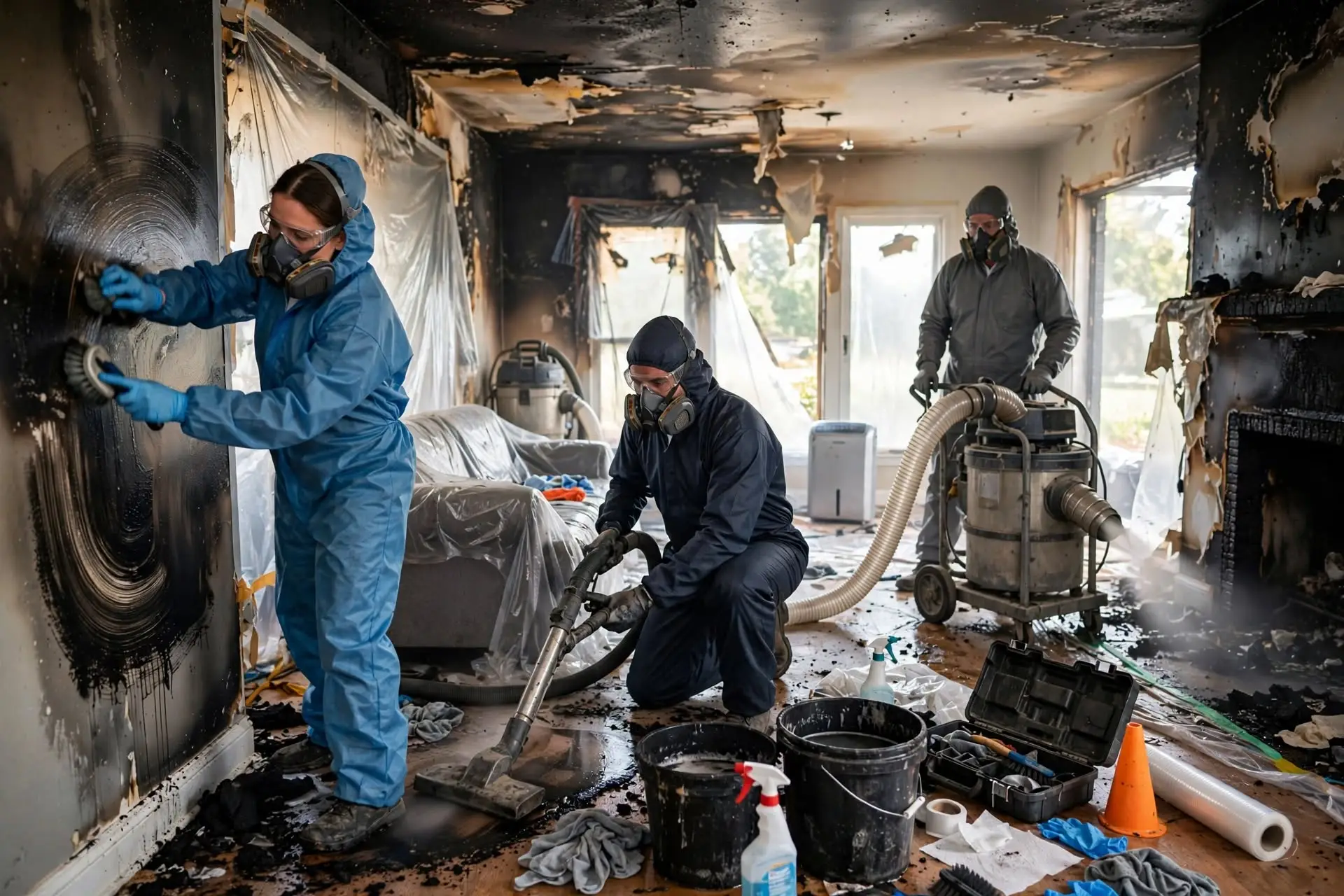
Fire damage restoration includes emergency board-up, soot and smoke cleanup, odor removal, and rebuilding of damaged structures. Contents are inventoried and cleaned when possible. The home is rebuilt to pre-loss condition.
Emergency services come first. Fire-damaged roofs and walls are boarded and tarped. This secures the property and prevents weather damage to the interior. Utilities are checked before anyone re-enters.
Soot cleanup is specialized work. Different fires produce different soot. Protein fires from kitchens leave nearly invisible residue with strong odor. Wood and paper fires leave dry soot. Synthetics leave wet, smeary soot. Each type needs the correct cleaning method. Incorrect cleaning drives soot deeper into surfaces.
Smoke odor removal follows cleaning. Porous materials absorb smoke odor. Odor counteractants, thermal fogging, and hydroxyl treatments neutralize odor at the molecular level. Some materials, such as heavily saturated insulation and carpet padding, are removed rather than treated.
Structural assessment determines what can be saved. Charred framing is evaluated for remaining strength. Compromised members are replaced. The rebuild then follows standard construction: framing, electrical, plumbing, insulation, drywall, finishes.
Before rebuilding after a fire, electrical and plumbing systems need safety verification. Heat damages wiring insulation even where flames never reached. Smoke corrodes metal components. A licensed electrician should verify circuits before drywall closes the walls. Plumbing lines in fire-damaged areas are pressure-tested. These checks are part of our rebuild scope, not extras.
Permits apply to fire rebuilds like any major construction. Structural, electrical, and plumbing work each require inspection in most Central Illinois municipalities. We pull the required permits and schedule inspections. This protects you at resale — unpermitted rebuild work creates problems when you sell.
Contents deserve attention too. Furniture, clothing, and documents are inventoried, cleaned off-site when possible, and returned after the rebuild. Items are only discarded with your approval and after insurance documentation.
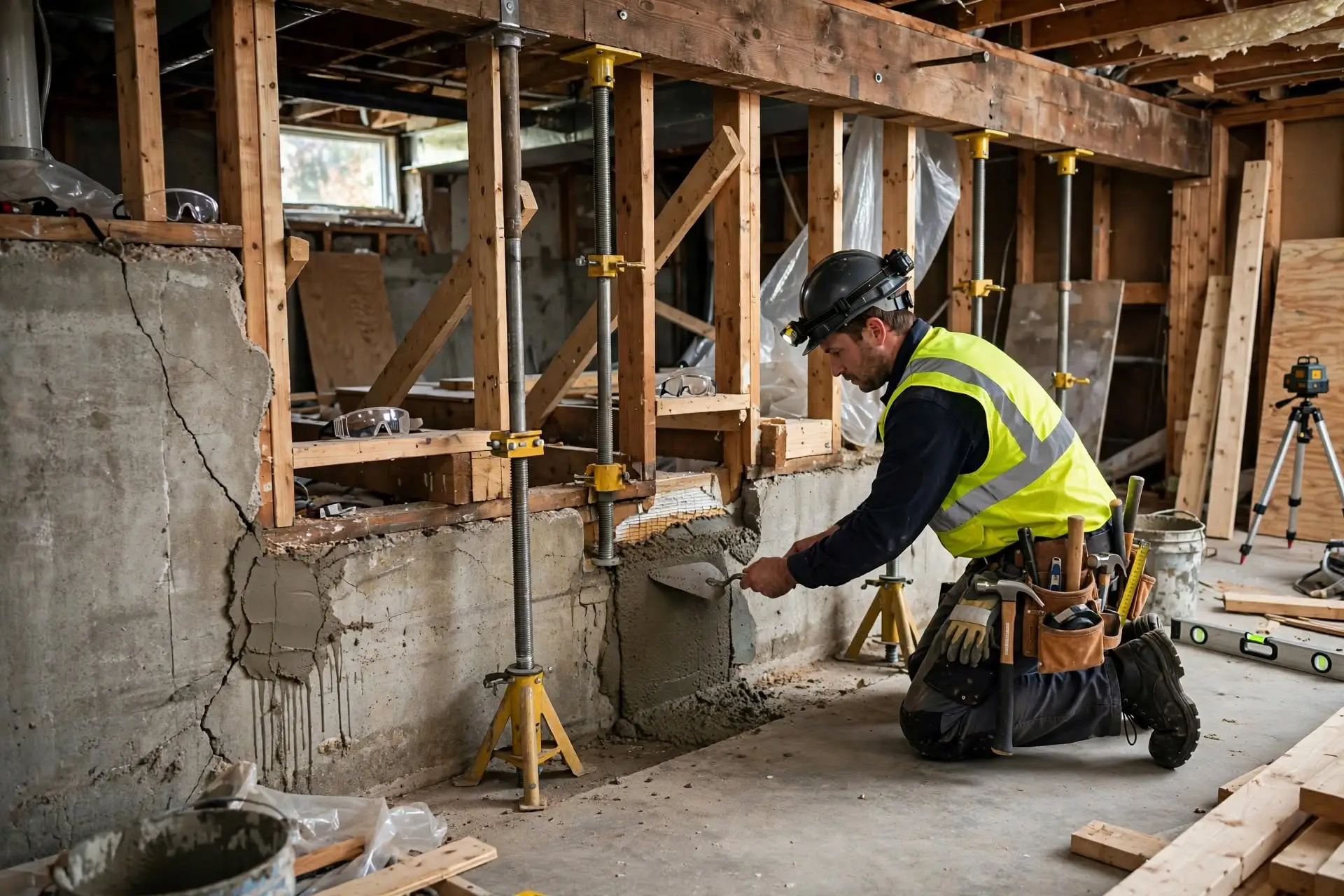
We handle foundation crack repair, damaged framing replacement, sagging floor correction, compromised load-bearing wall repair, and rotted sill plate replacement. A structural assessment determines which repairs are needed before any cosmetic work begins. Cosmetic repairs over unresolved structural problems will fail again.
Foundation cracks are common in Central Illinois due to soil movement and hydrostatic pressure. Hairline shrinkage cracks are often monitored. Wider cracks, horizontal cracks, or cracks with displacement need professional evaluation. Repair methods include epoxy injection for non-moving cracks and exterior waterproofing where water intrusion is the cause.
Framing repairs address fire damage, rot, and impact damage. Damaged studs, joists, and rafters are sistered or replaced. Load paths must remain continuous from roof to foundation. We verify connections at every step.
Sagging floors usually point to undersized joists, removed bearing walls, or deteriorated supports. The fix depends on the cause: sistering joists, adding beams, or replacing damaged posts and footings. We do not cover up sagging floors with new flooring until the structure is corrected.
For major structural concerns, we recommend evaluation by a licensed structural engineer. Engineering reports give everyone — homeowner, contractor, and insurer — a clear scope. If you are seeing warning signs, review the signs your home needs structural repairs and call us for an assessment.
Restoration costs depend on the type and extent of damage. These are broad planning estimates only — every project is scoped individually, and insurance often covers sudden and accidental damage. Emergency mitigation typically runs $500–$2,500. Water damage restoration commonly falls between $1,500 and $8,000 depending on how much material must be removed and dried. Storm repairs range from about $1,000 for minor roof and siding fixes to $15,000 or more for major damage. Fire and smoke restoration varies most widely, from roughly $5,000 for a contained kitchen fire to $50,000+ for whole-home rebuilds. After our assessment, you receive a written line-item estimate — request your free estimate to get exact numbers for your home.


Document the damage with photos, contact your insurer to open a claim, and meet the adjuster at your home. Your contractor provides a detailed scope of repairs with line items. The insurer approves the claim based on your policy terms, and then restoration work begins.
Documentation is your responsibility and your leverage. Photograph everything before cleanup. Keep a written inventory of damaged items with approximate ages and values. Save all receipts for emergency expenses, temporary housing, and meals if you are displaced. Organized documentation speeds up every claim.
The adjuster inspects the damage and determines coverage under your policy. Standard homeowner’s policies cover sudden and accidental damage: burst pipes, wind, hail, fire, and lightning. They typically exclude maintenance issues, gradual leaks, wear and tear, and flood unless you carry separate flood insurance. Know your deductible before the adjuster visit.
Two policy terms matter. Actual cash value pays the depreciated value of damaged items. Replacement cost pays what it costs to replace them with comparable new items, minus your deductible. Many policies pay actual cash value first and release the remainder after repairs are complete.
Your contractor’s role is to define the repair scope accurately. We provide detailed estimates with measurements, materials, and labor broken out. We meet adjusters on-site to walk through the scope. We do not negotiate your claim and we do not promise claim outcomes. Those decisions belong to you and your insurer.
What homeowners should know before disaster strikes: read your policy now, not after damage. Know your deductible, your coverage limits, and whether you have replacement cost or actual cash value coverage. Keep a home inventory with photos of major items and their approximate purchase dates — cloud storage works well. Know where your main water shutoff is and make sure every adult in the home knows too. These five minutes of preparation make every claim faster and larger.
One more point: be cautious about signing broad assignment-of-benefits agreements with contractors you have not vetted. Read every document before signing. A reputable contractor explains each form in plain language.
For practical guidance, see our tips for filing a restoration insurance claim. When you are ready, request a free remodeling estimate or contact Grace Built Construction directly.
Grace Built Construction is a Pekin-based contractor at 2416 Court St, Pekin, IL 61554, serving Pekin, Peoria, East Peoria, Creve Coeur, Washington, Tremont, Morton, and Tazewell County. We handle emergency mitigation and full rebuilds with one team, and we document everything your insurance claim requires.
One contractor from start to finish matters in restoration. Mitigation, drying, structural repair, and rebuild each affect the next. When one team owns the whole project, nothing gets lost between trades. You have one point of contact and one schedule.
Local experience matters too. We know how Central Illinois storms damage roofs and siding. We know where water enters basements in this soil. We know what adjusters in this market expect in documentation. That local knowledge shortens timelines.
Our process is transparent from the first visit. You receive a written scope with line items, a realistic timeline, and one point of contact. Change orders, if needed, are documented and approved before the work happens — never after. You always know what is happening, what it costs, and what comes next.
If your home is damaged now, call (309) 241-9593 for emergency restoration response. For non-emergency restoration planning, request your free estimate or contact us.
Call immediately. Emergency mitigation — tarping, board-up, water extraction — should start as soon as the property is safe. Fast response limits secondary damage such as mold growth, wood rot, and further water intrusion. Document the damage with photos first if you can do so safely, then call (309) 241-9593.
It depends on your policy and the cause of damage. Standard policies typically cover sudden and accidental events such as burst pipes, wind, hail, and fire. They typically exclude maintenance failures, gradual leaks, and flood without separate flood coverage. We document the damage and provide a detailed repair scope; your insurer determines coverage.
It depends on the extent of the damage. Localized repairs often allow you to stay with containment in place. Major fire damage, widespread water damage, or structural repairs may require temporary relocation for safety. We assess each project and give you a clear answer before work begins.
Timelines vary with scope. Emergency mitigation usually takes one to three days. Drying adds several more days. Full rebuilds range from weeks for single rooms to months for whole-home fire restoration. After our assessment, we provide a written timeline with your estimate.
We provide detailed scopes of work with measurements, materials, and labor broken out, and we meet adjusters on-site to walk through the damage and the proposed repairs. We document everything your claim requires. We do not negotiate claims or promise claim outcomes — those decisions belong to you and your insurer.