
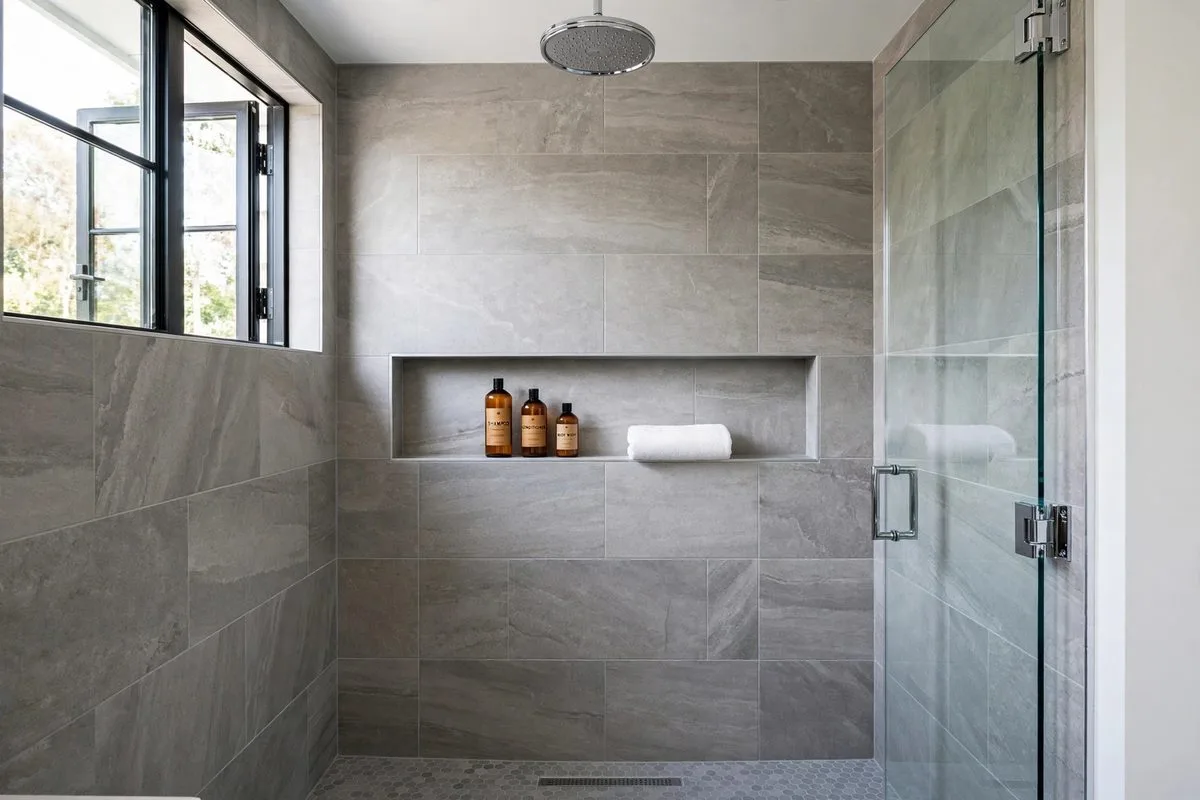
A shower niche is a recessed, waterproofed shelf built directly into the shower wall. It holds your shampoo, conditioner, and soap at arm’s reach — no plastic caddy hanging off the shower head, no bottles lined up on the floor, nothing to rust, slip, or knock over.
There is one thing to know before anything else: a niche is decided before the tile goes up, not after. Its size and position affect the wall framing, the waterproofing, and the tile layout itself. Once the wall is closed and tiled, adding a niche means opening that wall back up. That is why the planning in this guide matters as much as the ideas.
Below are 14 shower niche ideas with photos, followed by the practical details most idea galleries leave out: the sizes and heights that actually work, how a niche is waterproofed so it never leaks, the mistakes that cause problems years later, what to do if a niche is not right for your shower, and what a niche costs when it is added during a bathroom remodel.
Key takeaways
- Plan the niche before the tile goes up — it affects framing, waterproofing and layout.
- Allow 12–14″ clear height per shelf; usable depth is about 3″ in a 2×4 wall.
- Center the main niche around 48–60″ up, on an interior wall where possible.
- Most niches add $300–$1,200 to a remodel in the Pekin and Peoria area.
Shower Niche Types at a Glance
| Niche Type | Typical Size (W × H) | Best For | Cost Level |
|---|---|---|---|
| Standard single | 12″ × 24″ | Most showers | $ |
| Vertical / tall | 12″ × 36–48″ | Tall pump bottles, small footprint | $$ |
| Horizontal / linear | 24–48″ × 12–16″ | Modern look, long walls | $$ |
| Wall-to-wall | Full shower width × 12–16″ | Large walk-in showers | $$$ |
| Double / stacked | Two 12″ × 12–16″ shelves | Couples, families | $$ |
| Corner | 8–12″ per side | Small showers, tub combos | $ |
| Shaving (foot) niche | 12″ × 12″ | Leg shaving, a steady foot rest | $ |
| LED-lit | Any size + lighting | Spa feel, night use | $$$ |
14 Shower Niche Ideas
- Standard Single
- Vertical
- Horizontal
- Wall-to-Wall
- Double & Stacked
- Corner
- Shaving (Foot)
- Bench
- Seamless
- Contrast Tile
- LED-Lit
- Arched
- Slab-Shelf
- Stainless Steel
1The Standard Single Niche
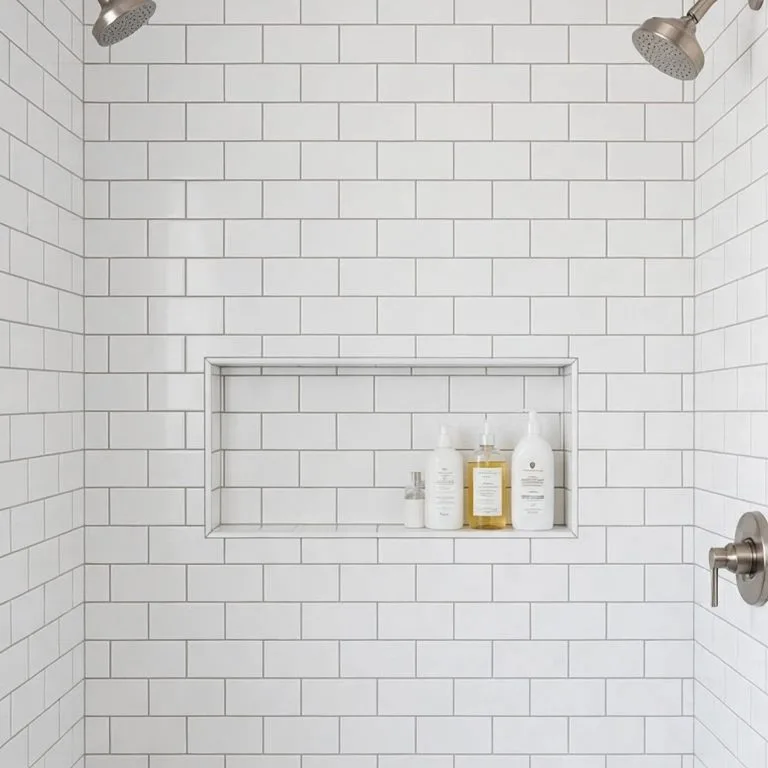
The classic. A single recessed shelf, usually around 12 inches wide and 24 inches tall with one divider shelf, built between the wall studs. It holds everything a typical shower needs — shampoo, conditioner, body wash, and a razor — without any custom framing, which keeps it the most affordable niche to build. If nobody in the house uses oversized bottles, this is the default choice, and it is the right one for most bathrooms.
Best for Most showers and most budgets.
2The Vertical (Tall) Niche
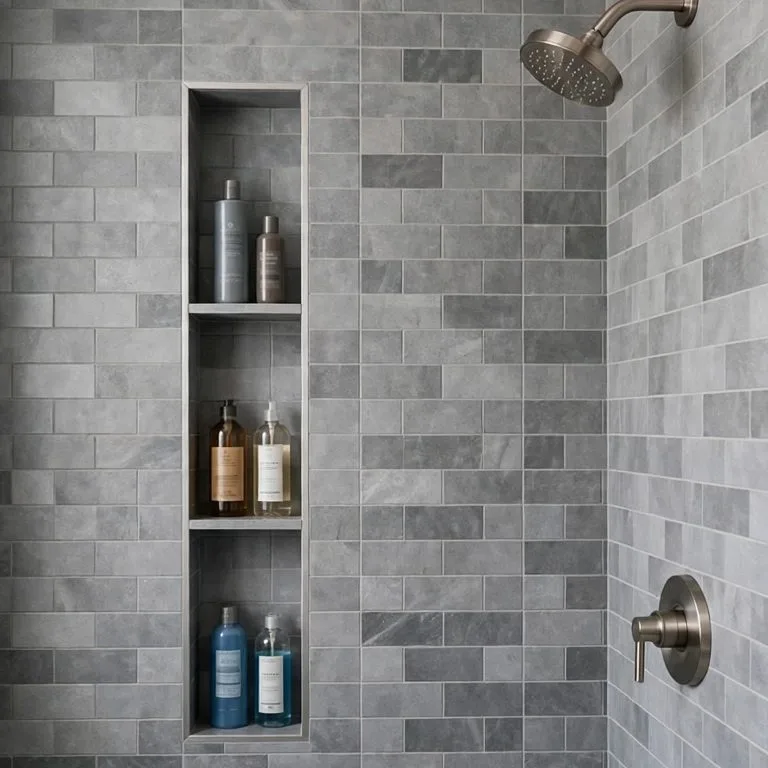
A vertical niche trades width for height: roughly 12 inches wide but 36 to 48 inches tall, split into two or three shelves. The tall lower shelf swallows the big pump bottles that do not fit a standard niche, while the short upper shelves handle soap and razors. Because it stays within one stud bay, it works in narrow showers where a wide niche will not fit — and it draws the eye upward, which makes a small shower feel taller.
Best for Small showers and tall bottles.
3The Horizontal (Linear) Niche

The horizontal niche is a long, low shelf — usually 12 to 16 inches tall and two to four feet long — that runs along the shower wall. It is the signature look of modern bathrooms: one clean line of storage that several people can share, with room for everything laid out in a row. It does cost more than a standard niche, because a long opening usually crosses the wall studs and needs its own framed box. Budget for that framing, and the result is worth it.
Best for Modern designs and shared showers.
4The Wall-to-Wall Niche
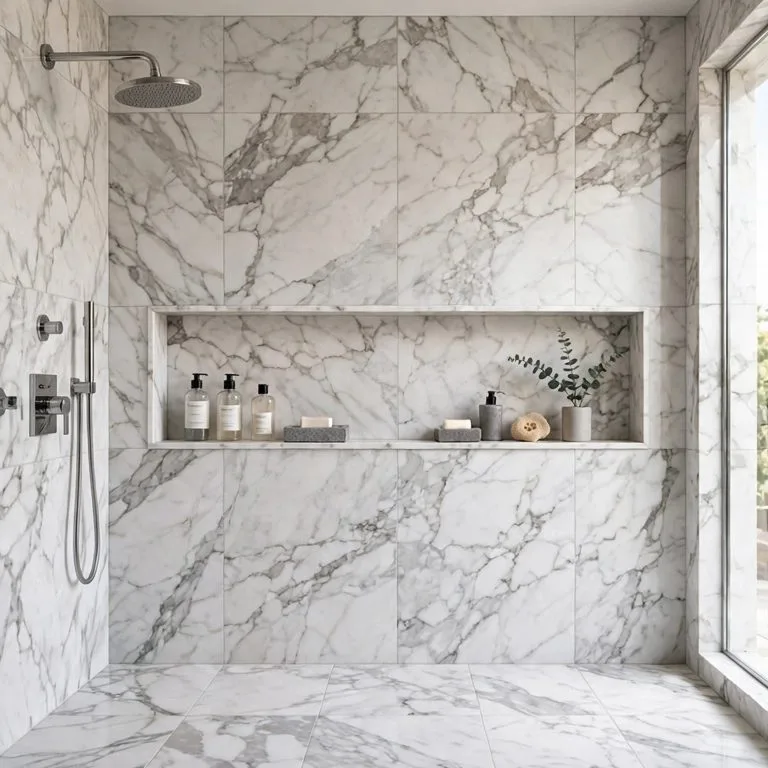
Take the linear niche all the way across the shower and you get the wall-to-wall niche — a continuous shelf from one end of the wall to the other. It suits large walk-in showers, especially under a window or along the back wall, and when the tile pattern runs through it uninterrupted, the whole wall reads as one designed surface rather than a box cut into it. This is a luxury detail, priced accordingly: the framing, waterproofing, and tile work all scale with its length.
Best for Large walk-in showers and high-end remodels.
5Double and Stacked Niches

Two niches instead of one: stacked vertically, side by side, or one on each wall. Couples use them as his-and-hers storage, families use them to separate the kids’ products from the adults’, and anyone with a lot of products gets a shelf for daily items plus one for the extras. A stacked pair in a single stud bay is a modest upgrade in cost; two separate niches on different walls costs more in framing and tile cuts but can be the most practical layout in a big shower.
Best for Couples, families, and product-heavy routines.
6The Corner Niche
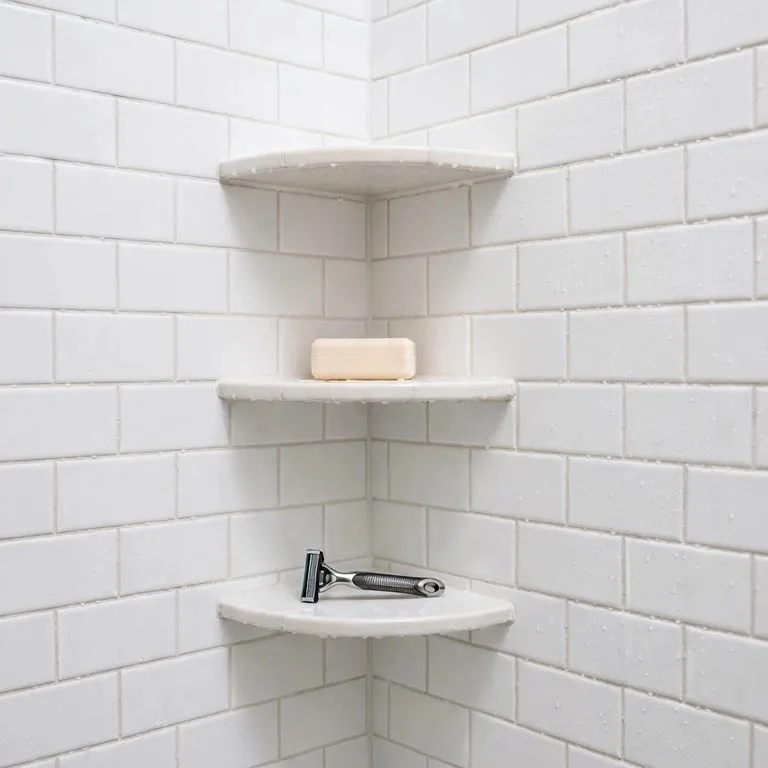
Corners are dead space in most showers. A corner niche wraps small shelves into that corner — usually as a pair of triangular or L-shaped shelves — and puts storage where nothing else can go. It is a smart answer for small showers and tub-shower combos where the main wall is short, tiled up with fixtures, or needed for a grab bar. Corner shelves are small, so think of them as the soap-and-razor station rather than full bottle storage.
Best for Small showers and tub-shower combos.
7The Shaving Niche (Foot Niche)
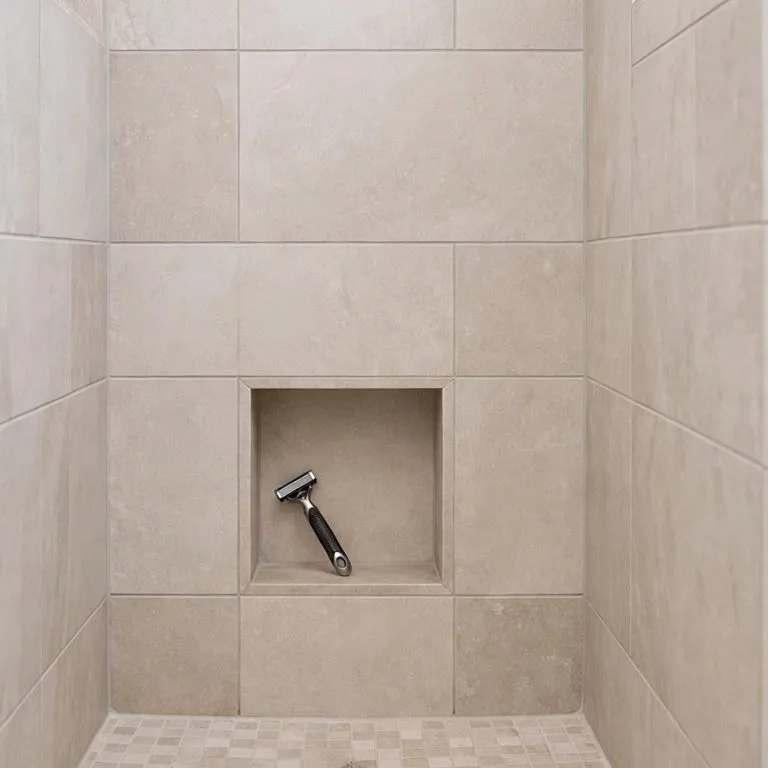
The smallest niche on this list may be the most appreciated. A shaving niche is a compact recess — about 12 by 12 inches — set low on the wall, 12 to 18 inches off the floor. It gives you a steady, slip-resistant place to rest a foot while shaving, with the razor and shave gel stored right there. It adds little to the cost of a remodel, and it is one of those details people mention years later when they describe what they love about their shower.
Best for Anyone who shaves their legs in the shower — which is a lot of people.
8The Bench Niche
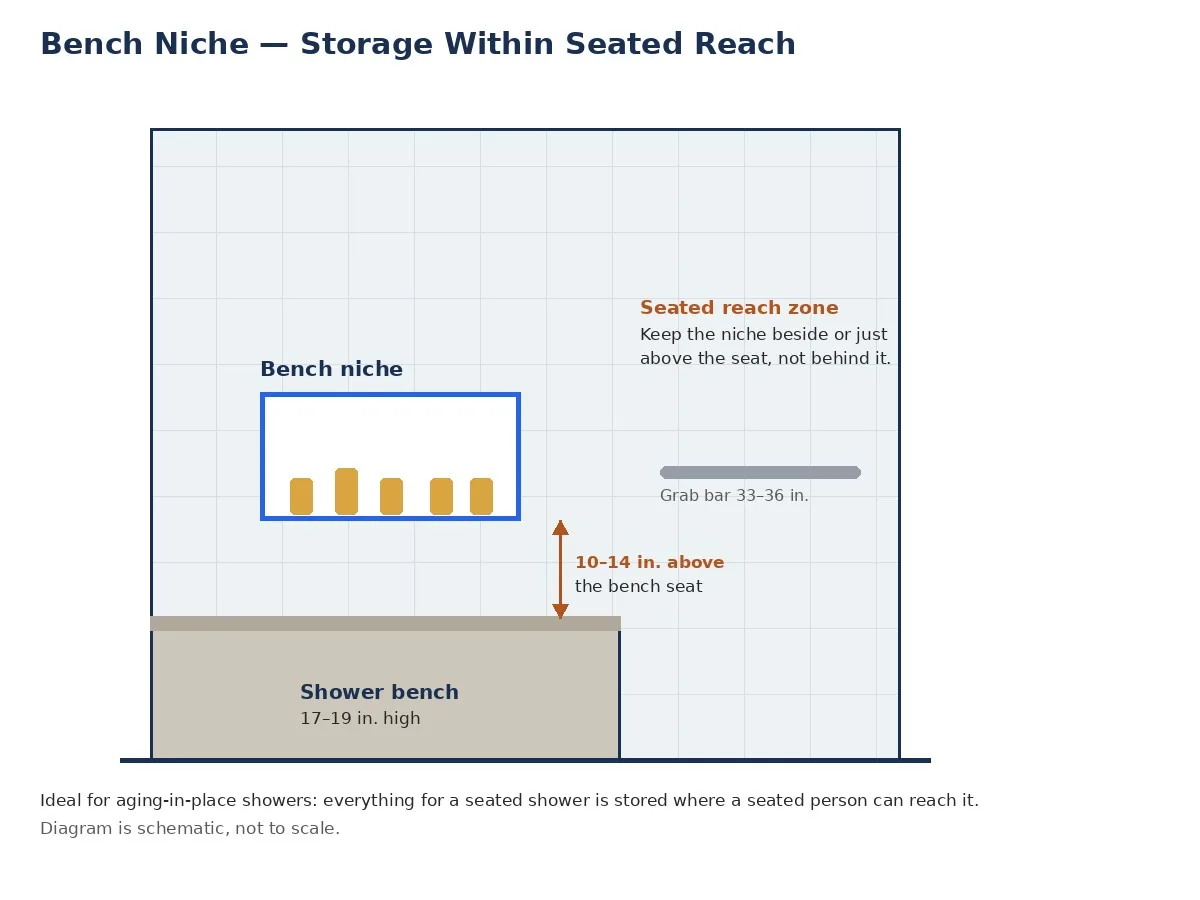
A shower bench is only half a comfort feature if your shampoo is still across the shower. A bench niche — a recess placed above or beside the bench, within reach of someone seated — completes it. This pairing matters most in showers designed for aging in place or for anyone with limited mobility: everything needed for a seated shower is stored where a seated person can reach it. If a bench is in the plan, plan this niche with it.
Best for Bench showers and aging-in-place designs.
10The Contrast Tile Niche
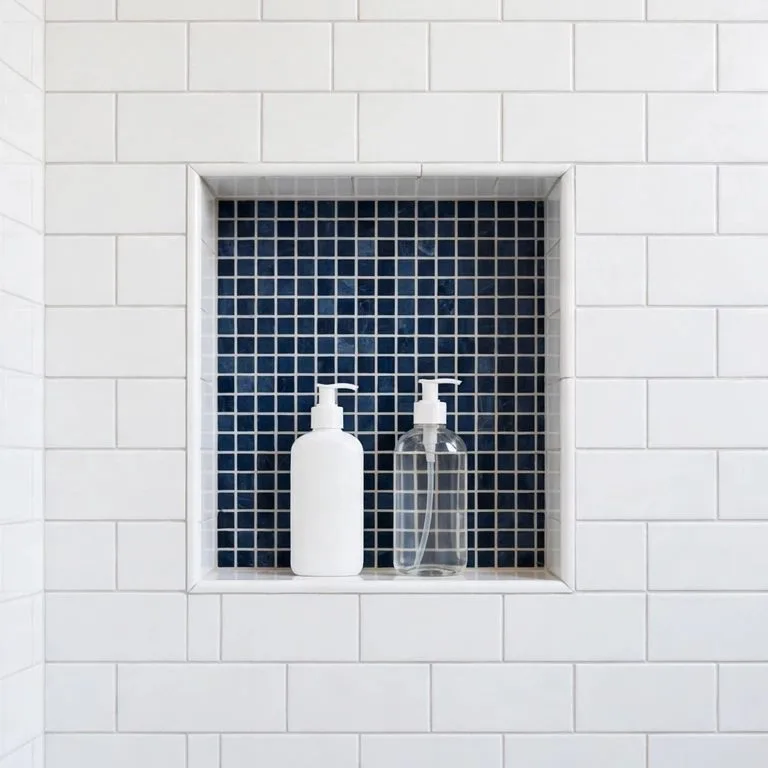
The opposite move — and still a beautiful one when it is done deliberately. The back panel of the niche gets a different tile: a mosaic, a herringbone, a penny tile, or a color pulled from elsewhere in the room. Because the niche is a small, contained area, it is the safest place in the bathroom to use an expensive or bold tile you love but would not commit a whole wall to. Framed by the plain wall tile around it, the niche becomes the artwork of the shower.
Best for Adding one bold feature without overwhelming the room.
11The LED-Lit Niche
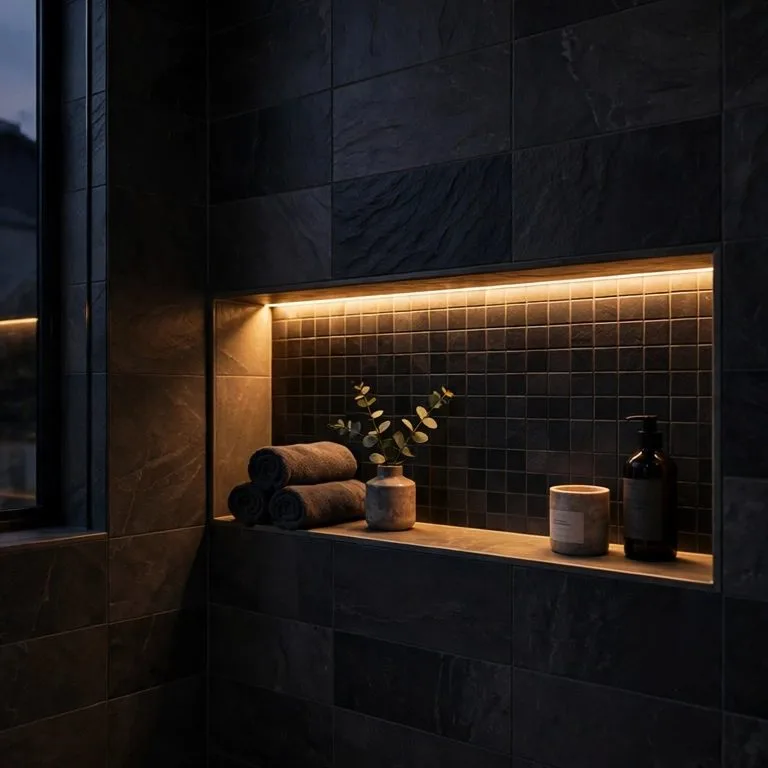
A waterproof LED strip tucked under the niche shelf turns storage into atmosphere. The niche glows like the displays in a spa or a good hotel, bottles are easy to find, and the light doubles as a gentle night light for the whole bathroom. The catch is planning: the wiring, driver, and switch have to be sorted out before the walls close, and the work needs a licensed electrician. It is a premium add-on — one of the luxury bathroom upgrades worth planning early — but in a primary bathroom it changes how the room feels every single evening.
Best for Primary bathrooms and spa-style remodels.
12The Arched Niche
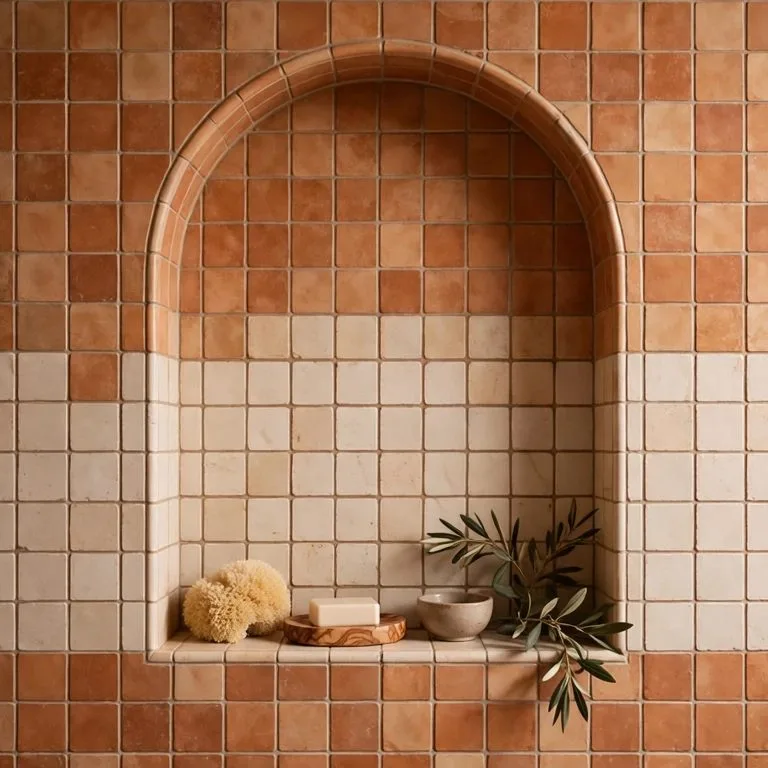
Most niches are rectangles. An arched niche replaces the flat top with a curve, echoing arched mirrors, doorways, and the Mediterranean and Spanish-influenced styles that have come back strongly. It softens a room full of hard tile lines and makes the niche feel like architecture rather than a cut-out. Expect it to cost more than a rectangle: every tile around that curve is a custom cut, and curves take a tiler’s time and skill.
Best for Mediterranean, transitional, and softer traditional bathrooms.
13The Slab-Shelf Niche
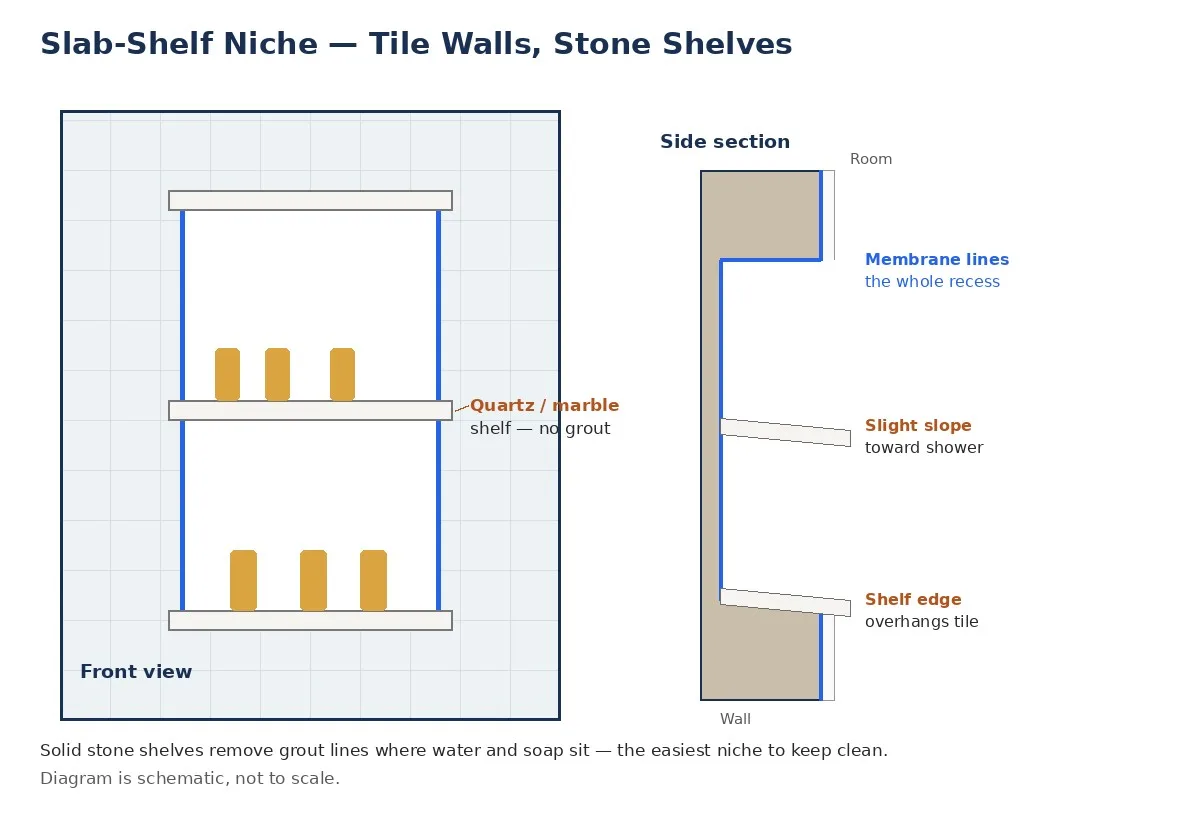
Here is a practical upgrade hiding inside a design choice: instead of tiling the shelves inside the niche, use solid pieces of quartz or marble as the shelves. You get the storage of a tiled niche with none of the grout lines on the surfaces where bottles sit and water lands — and grout lines are exactly where soap scum and mildew take hold. A slab shelf wipes clean in seconds. It is a small premium over tile, and for people who hate cleaning showers, the easiest premium on this list to justify.
Best for Low-maintenance bathrooms and anyone who hates scrubbing grout.
14The Stainless Steel Niche
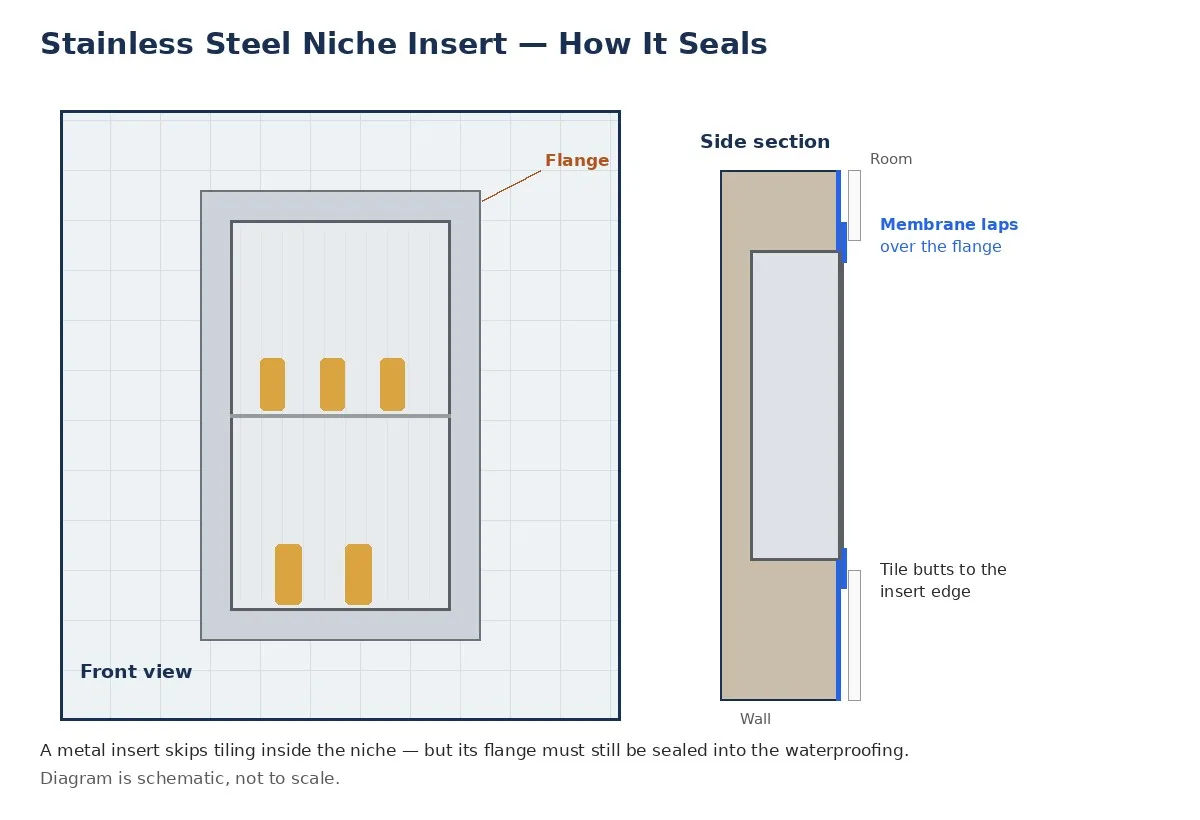
Not every niche is custom carpentry and tile. Prefinished stainless steel niches are ready-made inserts that install into the framed opening and are done — no tiling inside at all. The look is clean and modern, the surface is hygienic and wipes down instantly, and because the labor is minimal, it is the most budget-friendly way to get a real built-in niche. Brushed and matte black finishes blend into most fixture packages. One caution: the insert is not waterproof on its own — its flange still has to be sealed into the shower’s waterproofing membrane, exactly like a tiled niche.
Best for Tight budgets, rental properties, and clean modern designs.
Shower Niche Sizes and Placement: The Numbers That Matter
Ideas are the fun part, but size and placement decide whether a niche actually works. These are the dimensions we plan around:
| Decision | Recommendation |
|---|---|
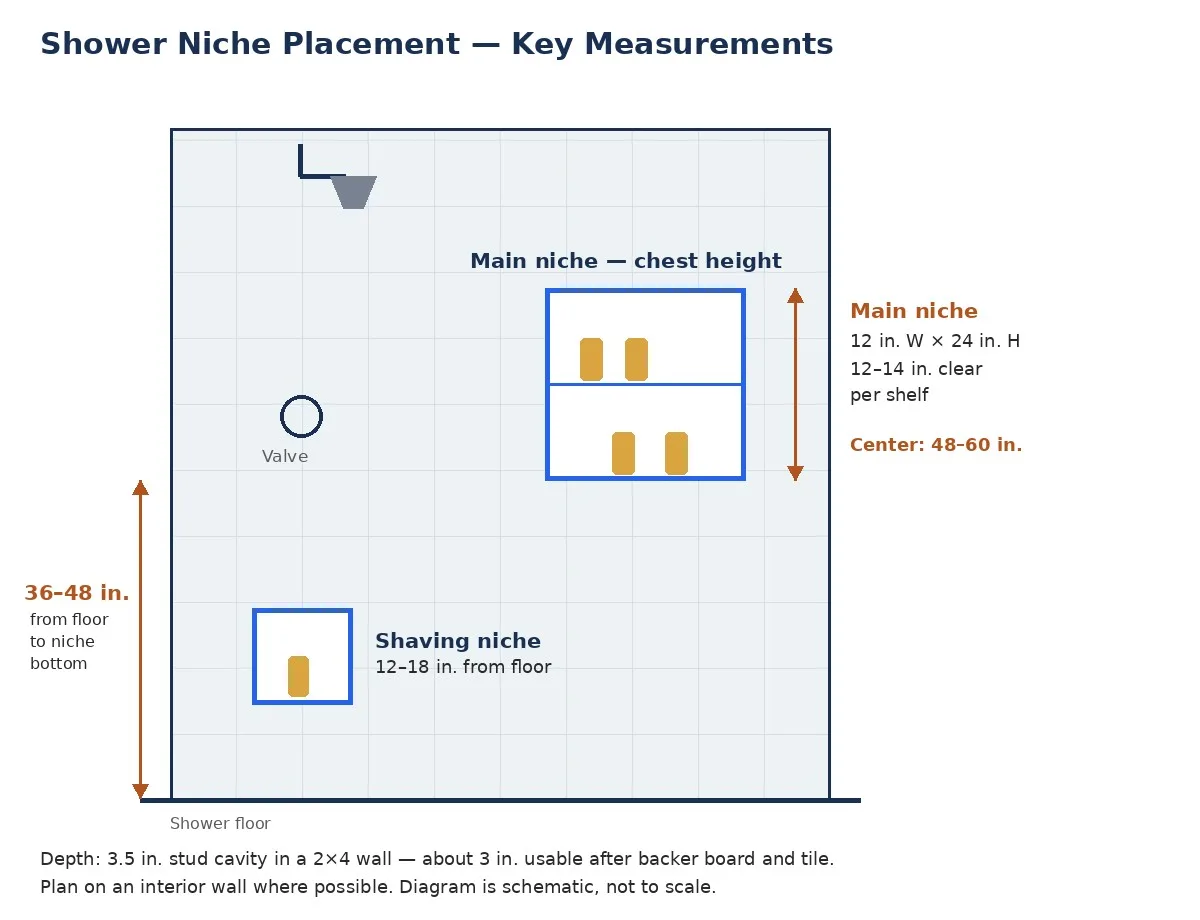
| Clear height per shelf opening | 12–14″ minimum — pump bottles stand 10–12″ tall |
| Standard depth | 3.5″ stud cavity in a 2×4 wall — about 3″ usable after backer board and tile; about 5″ usable in a 2×6 wall |
| Main niche height from floor | Centered around 48–60″ up (bottom edge about 36–48″) — chest height, easy reach |
| Shaving niche height | 12–18″ from the floor |
| Tub-shower combo | Lower than a walk-in: centered around 36–48″, reachable while seated in the tub |
| Common preformed sizes | 12×12, 12×20, 12×24, 16×20 — anything bigger is usually site-built |
A few placement rules that separate a good niche from an annoying one:
Plan it with the tile, not after it. The niche should line up with the tile layout so grout lines run cleanly into it. A niche positioned first and tiled around will almost always land mid-tile and look like an afterthought — because it was one.
Measure your tallest bottle before framing. The single most common niche complaint is a shelf a half-inch too short for the shampoo bottle. Bring the actual bottles to the planning conversation.
Keep it off the plumbing wall where you can. The wall carrying the shower valve and supply lines is crowded inside. An adjacent or opposite wall is usually easier to frame, insulate, and waterproof.
One right-sized niche beats two small ones. Every extra niche means more corners to waterproof and more grout to clean. Size one niche properly first.
How a Shower Niche Is Built and Waterproofed
A niche is a hole in a wet wall, so the waterproofing is not a detail — it is the whole point. There are two ways to build one. A preformed niche is a factory-made waterproof insert (foam or molded) that is installed into the framed opening and tiled directly over. A site-built niche is framed from lumber and backer board on site, which allows any size — including the long linear and wall-to-wall designs — but every inch of it must be waterproofed by hand.
Either way, the rules are the same. The waterproofing membrane on the wall has to run continuously through the niche, with the corners and seams sealed — corners are where leaks start. And the shelf is never built dead level: it gets a slight slope toward the shower, so water drains off instead of sitting in a puddle against the back wall.
This is the honest answer to the question homeowners ask us — do shower niches leak? A properly framed, properly waterproofed niche does not leak. A niche that was cut in quickly, with the membrane skipped or torn at the corners, is one of the first places a shower fails. The difference is entirely in the build, which is why a niche belongs in the hands of whoever is waterproofing the rest of the shower. Waterproofing and ventilation work as one system, so our bathroom remodeling team plans both together — and our guide to why bathroom ventilation matters explains the moisture side.
7 Common Shower Niche Mistakes
Too small for the bottles. A niche planned by eye instead of by measurement. Fix: 12–14 inches of clear height per shelf, confirmed against your tallest bottle.
A level shelf. Water pools on it, grout stays wet, and mildew moves in. A shelf should slope slightly toward the drain side — toward the shower.
Waterproofing skipped or broken at the corners. The most expensive mistake on this list, because the failure hides inside the wall until the damage is done.
A niche in an exterior wall. In Central Illinois winters, this one matters. A niche removes most of the insulation from that section of wall, leaving a cold pocket: condensation forms, grout and tile stay cold, and any plumbing nearby is closer to freezing. Wherever possible, put the niche on an interior wall. If the only wall is exterior, it needs proper insulation and air sealing behind it — not just tile.
Position decided after the tile layout. The niche lands wherever it lands, grout lines clash, and the whole shower looks slightly off forever.
Tiny mosaic tile and heavy grout inside the niche. It looks great in photos and is the hardest surface in the shower to keep clean. Larger tile or a slab shelf inside the niche cleans far easier.
No plan for how the shower is actually used. Two people, six bottles, one 12-inch shelf. Count the products first, then size the niche.
What If a Niche Is Not Right? Alternatives Compared
A niche is not the only way to store things in a shower, and for some showers it is not the best one. The strongest alternative right now is the tiled ledge — a low, continuous shelf built along the wall at about bench height. It holds just as much, has no enclosed corners to waterproof, and gives a long clean line that suits modern design. Here is how the options compare:
| Option | Storage | Added Cost | Cleaning | Best For |
|---|---|---|---|---|
| Built-in niche | High | $$ | Medium (grout lines) | Most remodels |
| Tiled ledge | High | $$ | Easy | Modern showers, long walls |
| Corner shelf (tile or stone) | Low–Medium | $ | Easy | Small showers, tight budgets |
| Bench storage | Medium | $$ | Easy | Large showers, aging in place |
| Wall-mounted caddy / dispenser | Low | $ | Easy | No remodel planned, rentals |
Our honest take: for most remodels the niche still wins — it takes zero floor space and keeps everything hidden in the wall line. The ledge wins when the wall cannot be opened up, when plumbing fills the stud bays, or when the shower is long enough that a ledge reads as a design feature. Our walk-in shower vs. tub comparison walks through the layout decisions that come before this one.
How Much Does a Shower Niche Cost?
Niches are an add-on to a shower or bathroom remodel, not a standalone job — the wall has to be open anyway. Typical added costs during a remodel in the Pekin and Peoria area:
| Niche Type | Typical Added Cost (During a Remodel) |
|---|---|
| Preformed insert niche, tiled | $300–$600 |
| Custom site-built tiled niche | $500–$1,200 |
| Long linear or wall-to-wall niche | $900–$1,800 |
| LED lighting add-on | +$150–$400 |
| Quartz or marble slab shelf inserts | +$100–$300 |
What moves the price: the size (crossing studs means re-framing), the tile pattern (mosaics and arches take longer), slab shelves versus tiled ones, and any electrical work for lighting. For context on how a niche fits into a full project budget, see our bathroom remodel cost guide. And if storage is your main headache, our small bathroom storage guide covers the rest of the room — vanities, recessed cabinets, and shelving — while this article handles everything inside the shower itself.
Frequently Asked Questions
How big should a shower niche be?
For most showers, a niche about 12 inches wide and 24 inches tall with one shelf is enough. The critical number is clear height per shelf: allow 12 to 14 inches so standard pump bottles fit standing up. Usable depth is about 3 inches in a standard 2×4 wall, set by the framing.
How high should a shower niche be installed?
The main niche is usually centered 48 to 60 inches above the shower floor, with its bottom edge around 36 to 48 inches — roughly chest height for most adults. A shaving niche goes much lower, at 12 to 18 inches. In a tub-shower combo, keep the niche lower (centered about 36 to 48 inches) so it can be reached while seated.
Are shower niches still in style in 2026?
Yes. What has changed is the finish, not the niche itself. The current look is a seamless niche tiled to match the wall, or a clean linear niche. Busy contrasting mosaic in every niche is the part that reads as dated — and even that works when it is a deliberate single feature.
Do shower niches leak?
Not when they are built correctly. Leaks happen when the waterproofing membrane is skipped, cut, or left unsealed at the corners, or when the shelf is built level so water sits against the seams. A niche framed, sloped, and waterproofed as part of the shower system is as watertight as the rest of the wall.
What are the most common shower niche mistakes?
Sizing the shelf too small for real bottles, building the shelf level so water pools, breaking the waterproofing at the corners, placing the niche in an exterior wall in a cold climate, and deciding its position after the tile layout is set. Every one of them is a planning mistake, which means every one is avoidable — the full list of seven is above.
What can you do instead of a shower niche?
The main alternatives are a tiled ledge along the wall, corner shelves, storage on a shower bench, or a wall-mounted dispenser. A ledge is the closest equivalent — similar storage, easier cleaning — and suits showers where the wall cannot be opened for a niche.
Can a shower niche be added to an existing shower?
Not without opening the wall. A niche needs framing, waterproofing, and tile work inside the wall cavity, so it is a remodel-stage decision. If your shower is already finished, a ledge added during a re-tile, or a quality wall-mounted dispenser, is the practical route until the next remodel.
Plan the Niche Before the Tile
A shower niche is four inches of wall that you will use every single day. Pick the right type from the ideas above, size it around your tallest bottle, place it at chest height on an interior wall, and have it waterproofed as part of the shower — and it will quietly be one of the best decisions in the remodel.
Planning a bathroom remodel in Pekin or Peoria?
Grace Built Construction designs the storage into the shower from the start — niches, benches, and ledges included. Tell us what your dream shower needs to hold.