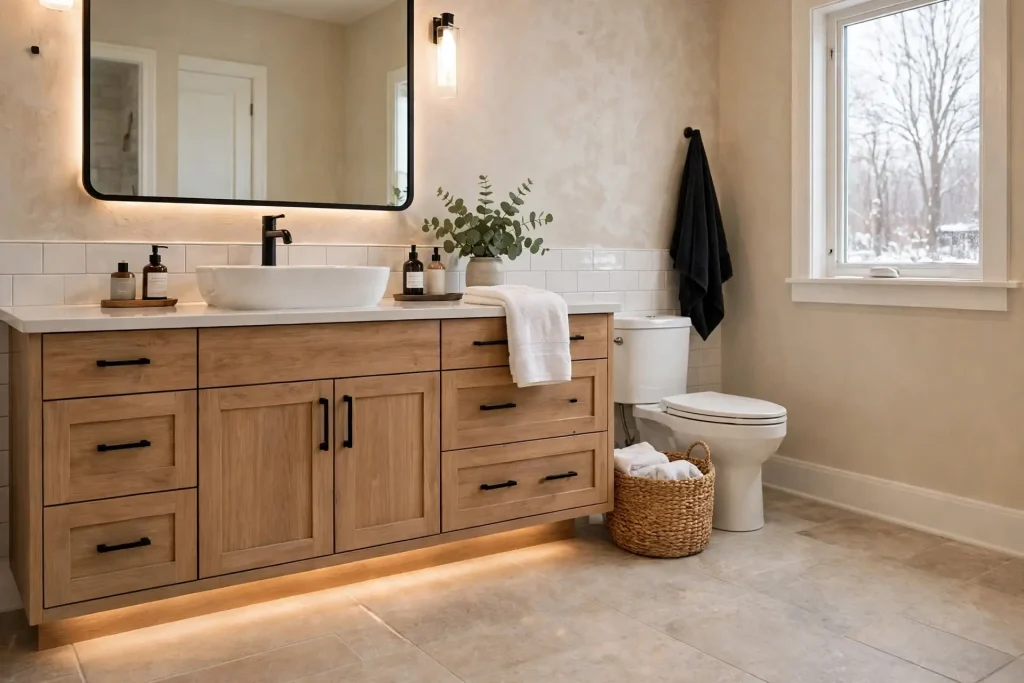
A cold tile floor on a January morning is one of the small miseries of an Illinois winter, and a heated bathroom floor is the fix homeowners rank highest once they have lived with one. The heated bathroom floor cost runs lower than most people expect for a bathroom sized space, and the comfort it buys runs from fall through spring in this climate. A heated floor warms the tile from underneath, so the surface is warm underfoot and the heat rises evenly through the room instead of blowing from a vent.
This guide covers how the systems work, the two main types and how they differ, what heated tile floors cost to install and to run in the local market, and if the upgrade pays off in an Illinois home. For anyone who has wondered if heated bathroom floors are worth it, the honest answer sits in the sections below.
The Problem: The Coldest Floor in the House Comes Up Only Once
Bathroom tile is the coldest surface most people touch all day, and in Illinois that chill lasts for months. The frustrating part is the timing of the fix. Radiant floor heating installs between the subfloor and the tile, which means the only affordable moment to add it is while the floor is already open during a remodel or a new tile install. Once the tile is down, adding heat later means tearing it all out, which turns a modest upgrade into a full floor replacement.
That timing trap is why so many homeowners regret skipping it. They replace a bathroom floor, live with the cold for a few winters, and then face the full cost of redoing the floor just to add the heat they could have built in for a four figure line the first time. The decision, then, is less about if warm floors are nice, since nearly everyone agrees they are, and more about catching the one window when the floor is open. The sections below give the information needed to make that call before the tile goes down.
How Radiant Floor Heating in a Bathroom Works
Radiant floor heating places a heat source directly under the floor finish, usually tile, and warms the floor surface rather than the air. Heat then rises into the room and into the people and objects in it, which is why a radiant floor feels warm in a way a forced air vent does not. There are no drafts, no blown dust, and no cold spots, since the whole floor is the heat source.
In a bathroom the system is installed during the floor build, between the subfloor and the tile, wired or plumbed to a thermostat. A programmable or smart thermostat lets the floor warm up before the household wakes, so the tile is already comfortable at the start of the day rather than warming up after someone turns it on. In a small bathroom the system can serve as the room’s only heat source, and in a larger one it works alongside the home’s existing heat. Because it adds very little height to the floor, it fits under tile without raising the floor level in a way anyone notices.
The Two Types, Electric & Hydronic
Two kinds of radiant floor heating show up in homes, and they suit different situations.
Electric Radiant Heat
Electric systems use a thin heating cable, often pre attached to a mat, laid under the tile and wired to a thermostat. They are the common choice for bathrooms because they install easily in a single room, add little height to the floor, and cost less upfront than the alternative. For a bathroom remodel, electric radiant heat is almost always the right fit, since the room is small and the system serves it on its own without any connection to the home’s heating equipment.
Hydronic Radiant Heat
Hydronic systems run warm water through tubing under the floor, fed by a boiler or water heater. They cost more to install and make the most sense for whole house radiant heating or large areas, where their lower operating cost over big square footage pays back the higher setup. For a single bathroom, hydronic is usually more system than the room needs, and the plumbing and equipment it requires rarely justify themselves in one small space.
For nearly every bathroom project, electric radiant heat is the practical answer, and the rest of this guide prices it on that basis.
What Heated Tile Floors Cost
Heated bathroom floor cost splits into installation and operation. Installation runs by the square foot of the heated area, and because bathrooms are small, the total stays modest. Operating cost is low for a space this size, especially with a programmable thermostat running the floor only when it is wanted. The table below reflects typical pricing in the Central Illinois market.
| Item | Typical Cost | Notes |
| Electric radiant system, installed | $10 to $20 per sq ft | Added during the floor build |
| Typical bathroom heated area | 30 to 60 sq ft | Often the open floor only, not under the vanity or tub |
| System total, average bathroom | $600 to $1,500 | Material & labor |
| Programmable or smart thermostat | $150 to $300 | Pays for itself in control |
| Operating cost | A few dollars a month | Runs on a schedule |
| Retrofit into an existing floor | Cost of a full floor tear-out and replacement | The expense this upgrade avoids by timing |
The one firm rule is timing. A heated floor installs only while the floor is open, so it costs little as part of a remodel and far more as a standalone retrofit that requires removing the existing tile first. If a bathroom remodel is on the horizon, that is the moment to decide on radiant heat, since the same system that costs a four figure line now would cost several times that to add later.
Are Heated Bathroom Floors Worth It in Illinois
The climate makes the case. In a state with a long, cold heating season, a warm bathroom floor earns its keep for months every year, and homeowners who add one consistently name it the upgrade they would repeat. Several points settle the value question.
The comfort is daily and immediate, not occasional. From fall through spring the floor greets the household warm every morning, which is exactly when an Illinois bathroom floor is otherwise at its coldest. The cost to add is small inside a remodel, often a four figure line that sits well below the tile, the vanity, or the shower in the same project. The operating cost is minor for a room this size, particularly on a schedule that runs the floor only around the hours it is used. And the feature reads as high end to buyers, so it adds a measure of resale appeal on top of the daily comfort.
The main reason not to add one is timing rather than value. If no remodel is planned and the existing floor is sound, tearing it out only to add heat rarely makes sense. Paired with a remodel that is already replacing the floor, though, radiant heat is one of the highest satisfaction dollars in the whole project. For an Illinois home, the answer to are heated bathroom floors worth it is yes in nearly every case where the floor is already coming up.
Frequently Asked Questions
How much does a heated bathroom floor cost to install?
In the local market, an electric radiant system runs about 10 to 20 dollars per square foot installed, which puts a typical bathroom between 600 and 1,500 dollars for the heated area, plus 150 to 300 dollars for a programmable thermostat. The cost stays modest because bathrooms are small and the system installs during the floor build.
Are heated bathroom floors expensive to run?
No, operating cost is low for a space this size. A bathroom floor running on a programmable schedule, warming only around the hours the room is used, costs a few dollars a month. The thermostat is what keeps the running cost down, since it avoids heating the floor around the clock.
What is the difference between electric & hydronic heated floors?
Electric systems use a heating cable under the tile and suit single rooms like bathrooms, installing easily and costing less upfront. Hydronic systems run warm water through tubing and suit whole house or large area heating, where their lower running cost over big square footage pays back the higher setup. For one bathroom, electric is almost always the right choice.
Can I add a heated floor to my existing bathroom without a remodel?
Only by removing the existing tile first, since the system installs between the subfloor and the tile. That makes a standalone retrofit far more expensive than adding it during a remodel, because it turns into a full floor tear-out and replacement. The affordable moment is while the floor is already open.
Do heated floors work as the only heat in a bathroom?
In a small bathroom, an electric radiant floor can serve as the room’s only heat source, keeping the whole space comfortable. In a larger bathroom it usually works alongside the home’s existing heat. A remodeler can size the system to the room so it carries the load it is meant to.
Warm Tile for Every Illinois Morning
A heated bathroom floor turns the coldest surface in the house into a warm one for the length of an Illinois winter, and it does so for a modest share of a remodel budget and a few dollars a month to run. The decision is less about if the comfort is worth it and more about catching the one moment the floor is open to add it. If you are planning a bathroom remodel in Pekin, East Peoria, Morton, Washington, or the surrounding Central Illinois area, our team builds radiant heat into the floor as part of the project so you never face a cold tile morning again. Request your free estimate or call (309) 241-9593 to plan it in.