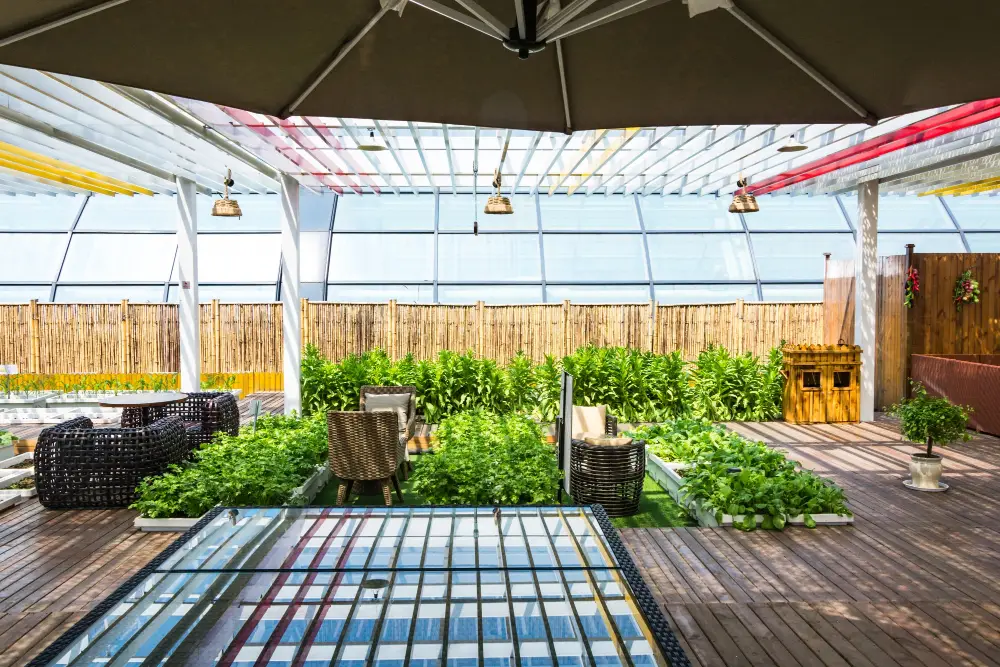
An Illinois backyard earns its deck. After a winter spent indoors, families here squeeze every warm evening out of the outdoor season, and the deck is where most of that living happens: dinners, birthday parties, coffee before work, and the long summer nights the whole state waits for. The best deck design ideas for Illinois backyards start from that reality, building for a climate that swings from humid July heat to January freeze and back, on soil that heaves with every cycle. Design choices that make sense in Arizona fail here, and choices that respect the local conditions produce decks that stay beautiful and safe for decades. This guide covers the design directions Illinois homeowners are choosing, the materials that survive the climate, the features that stretch the season, and what deck projects cost in the Central Illinois market.
The Problem: Illinois Weather Eats Badly Designed Decks
The deck failures common across the state trace to the same causes. Freeze-thaw cycling heaves footings that were not dug below the frost line, racking frames and pulling railings loose. Humidity and rain rot untreated or poorly maintained wood, starting at the ledger board where the deck meets the house, which is also where the failures turn dangerous. Sun bakes and grays unprotected surfaces, and the stain-and-seal cycle that wood demands here, every one to two years, is the maintenance chore homeowners abandon first.
Design decisions compound the climate problems or solve them. A deck built with proper footings, flashed connections, climate-suited materials, and drainage details shrugs off the weather that destroys a corner-cut build. The design ideas below all sit on that foundation, because in Illinois the pretty part of deck design only lasts as long as the engineering underneath it.
Composite Decking Leads the Material Shift
The biggest design trend in Illinois deck building is a material decision. Composite and PVC decking now anchor most new builds in the region, and the climate is the reason. Composite boards shrug off the moisture, sun, and freeze cycling that force wood into the endless staining rotation, holding their color and staying splinter-free for decades with nothing but occasional washing.
The design payoff comes with the durability. Modern composites offer wood-grain textures and color ranges from driftwood grays to rich browns, plus picture-frame borders and inlay patterns that stained lumber cannot match. Pressure-treated wood still wins on upfront price and remains the standard for framing underneath, and cedar keeps its fans for its look. But for the walking surface, the market has voted, and the vote is about Illinois weather.
Multi-Level Designs Fit Real Backyards
Flat, single-platform decks are giving way to multi-level designs that work with the yard instead of against it. A main level off the kitchen for dining, a step down to a lounge or fire pit level, and a landing that transitions to a patio or lawn create defined outdoor rooms without a single wall.
Multi-level layouts solve practical Illinois problems too. They manage sloped lots common across Central Illinois neighborhoods, they break up large decks so railing requirements apply only where height demands them, and they separate the grill zone from the conversation zone so smoke and traffic stop fighting. On ranch homes typical of the region, a two-level deck also eases the height transition from the main floor down to the yard.
Covered & Screened Sections Stretch the Season
The feature Illinois homeowners request most is shelter, because the deck season here is worth extending. Roofed sections, from simple shed-style covers to full gable structures that match the house, keep the dinner table dry through summer storms and shaded through July. Screened porch sections take it further, ending the mosquito negotiation entirely and adding what amounts to another room from April through October.
Pergolas offer the lighter version, filtering sun and defining an outdoor ceiling without full weather protection, and they pair with retractable canopies for flexibility. The design decision is really a seasons decision: an open deck serves perhaps five months here, a covered one seven, and a screened one closer to eight.
Built-In Features Do the Furnishing
Built-ins have moved from custom luxury to standard request, and they suit the way families use decks. Bench seating along railings seats a crowd without a furniture budget and doubles as storage for cushions and toys. Built-in planters soften edges and define zones. Outdoor kitchens, from a simple grill surround with counter space to full cook stations, keep the cook in the party.
Fire features lead the wish lists, and for a Illinois-specific reason: a fire pit or fireplace extends deck evenings deep into October and brings them back in April, adding weeks to both ends of the season. Gas units on composite decks with proper clearances, or wood-burning pits on adjacent patios, both work when designed in from the start rather than added after.
Lighting & Railing Choices Finish the Design
Two detail categories separate builder-basic decks from designed ones. Low-voltage lighting, stair riser lights, post cap lights, and rail strips, makes the deck safe and usable after dark, which is when Illinois summer decks see their heaviest use. Planned during construction, the wiring hides inside the structure and costs a fraction of retrofitting.
Railing has become a design statement of its own. Black aluminum balusters against composite posts read clean and modern, cable rail keeps sightlines open to the yard, and glass panels do the same for decks with views worth keeping. Since railings are also the code-regulated safety element of the deck, this is a spot where the design choice and the inspection requirement meet, and where an experienced builder earns the fee.
What Decks Cost in Central Illinois
Deck pricing scales with size, material, and features, and the local market prices below the national figures homeowners find online.
| Deck Project | Typical Cost Range (Installed) | Notes |
| Pressure-treated wood deck, 12×16 | $6,000 to $12,000 | Lowest upfront, ongoing staining |
| Composite deck, 12×16 | $10,000 to $20,000 | Minimal maintenance for decades |
| Multi-level composite deck, 400+ sq ft | $25,000 to $50,000 | Includes stairs and railings |
| Covered deck section | $8,000 to $25,000 added | Shed roof to full gable |
| Screened porch conversion | $15,000 to $40,000 | Roof, screens, electrical |
| Built-in seating and planters | $1,500 to $6,000 | Priced per linear run |
| Deck lighting package | $1,000 to $3,500 | Low-voltage, built during construction |
| Fire feature integration | $2,000 to $8,000 | Gas units with clearances |
The wood-versus-composite math deserves one note: composite costs 50 to 80 percent more upfront and erases the stain-and-seal cycle that costs wood owners several hundred dollars every year or two. Over a fifteen-year horizon, the totals converge, and the composite owner spent the difference on weekends instead of staining.
Frequently Asked Questions
What is the best decking material for Illinois weather?
Composite and PVC decking handle the freeze-thaw cycling, humidity, and sun that Illinois delivers, with no staining and decades of service. Pressure-treated lumber remains the budget option and the framing standard, but it commits the owner to sealing every one to two years to survive the same climate.
Do decks require permits in Illinois?
Yes, in nearly all municipalities, including across the Pekin area, and the requirements cover footing depth, ledger attachment, and railing specifications. Illinois frost depth means footings must reach roughly 36 inches or deeper, and the inspection process exists because ledger and footing failures are the dangerous ones.
How can I make my deck usable for more of the year?
Shelter and heat stretch the season most. A covered or screened section keeps rain and insects out from spring through fall, a fire feature adds usable evenings in April and October, and lighting makes summer nights count. Together they can push a five-month deck toward eight.
Is composite decking worth the extra cost?
For most Illinois homeowners, yes. The upfront premium of 50 to 80 percent over wood buys freedom from the staining cycle, splinter-free boards for kids and pets, and color that survives the sun. Over ten to fifteen years the total costs converge while the maintenance hours never happen.
How long does a deck build take?
A straightforward single-level deck typically runs one to two weeks of construction after permits. Multi-level designs, covered sections, and screened porches extend that to three to six weeks. Spring calendars fill first in Central Illinois, so winter planning gets the best build slots.
Related Reading & Services
Build the Backyard Season Your Family Deserves
An Illinois deck done right is the best room in the house for half the year, and the design decisions that make it last are the same ones that make it beautiful. If you are planning a deck, covered porch, or full outdoor living space in Pekin, East Peoria, Morton, Washington, or the surrounding Central Illinois area, our team designs for this climate, builds to code with permits and inspections, and has the projects around town to show for it. Request your free estimate or call (309) 241-9593 and let’s have the deck ready before the good weather gets here.
Related reading: Remodeling Permit Requirements in Pekin IL | What Makes a Good Remodeling Warranty?