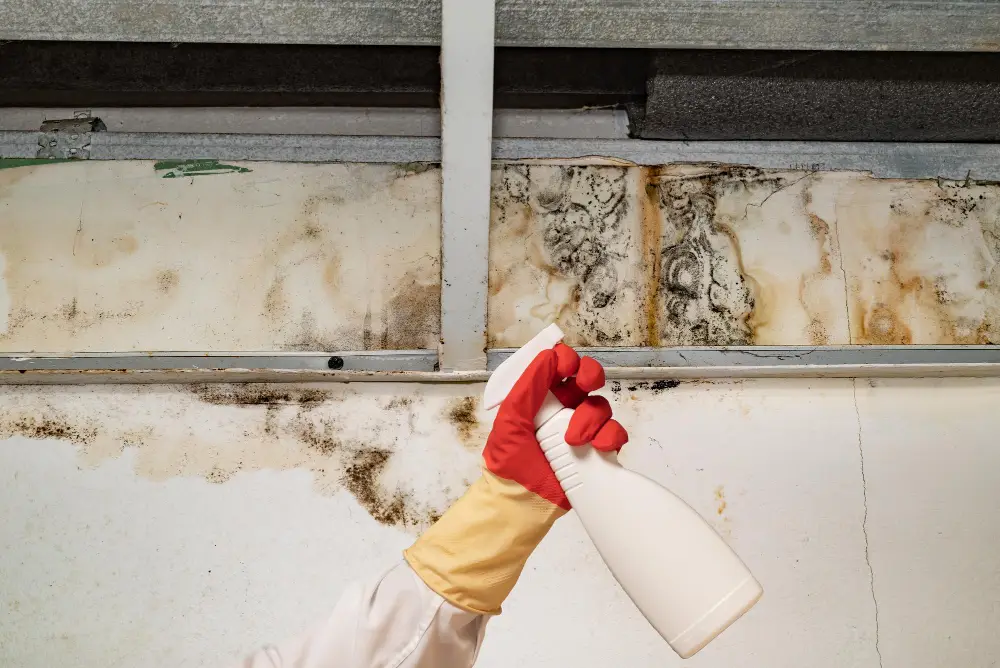
A finished basement adds real living space to your home, but it sits in the dampest part of the house, and that combination makes homeowners nervous for good reason. Learning how to prevent mold in finished basements is not about constant worry or weekly bleach scrubbing. It is about building and maintaining the space so mold never gets what it needs to start. Mold needs three things: moisture, organic material to feed on, and time. You cannot remove the food source, since drywall paper, wood framing, and carpet are all on the menu. What you can control is moisture and time, and every strategy in this guide comes back to those two levers. Here is how to keep your downstairs living space as clean and dry as any room upstairs, from the construction phase through everyday maintenance.
Why Finished Basements Are Mold Magnets
Basements collect moisture from every direction. Concrete walls and slabs wick water from the surrounding soil year-round, a process that never fully stops even in dry weather. Cool basement air condenses humidity onto cold surfaces the way a glass of iced tea sweats in summer. Plumbing for the whole house runs overhead, water heaters and washing machines live down there, and the sump pit sits in the corner.
An unfinished basement shrugs most of this off, because bare concrete gives mold nothing to eat and problems stay visible. Finishing changes the equation. Drywall, framing, insulation, and carpet add food sources, and they hide the moisture that feeds growth. A slow leak behind a finished wall can work for months before anyone smells it. That is why mold prevention in a finished basement starts before the finishing and never fully ends.
Solve Water Problems Before You Finish Anything
The worst basement mold cases almost always trace back to a moisture issue that existed before the finishing work started.
Check the Outside First
Walk around your foundation after a hard rain. Water should move away from the house, not pool against it. Soil should slope down at least 6 inches over the first 10 feet. Downspouts need extensions carrying roof water 4 to 6 feet from the foundation at minimum, and gutters need to be clear, because overflowing gutters dump water straight down the wall and into the soil beside your basement. These fixes cost almost nothing compared to mold remediation, and they prevent the majority of basement water issues.
Test the Slab & Walls
Before finishing, tape a 2 foot square of plastic sheeting to the bare concrete floor and wall, sealing all four edges. Leave it for 48 hours. If condensation forms underneath, moisture is migrating through the concrete and you need a vapor barrier strategy before any framing goes up. Skipping this test is how homeowners end up with musty carpet two years after the renovation.
Fix Cracks & Seepage for Real
Hairline cracks can be sealed with epoxy or polyurethane injection. Active seepage calls for bigger moves: an interior drain tile system, a sump pump, or exterior waterproofing. Painting over a wet wall with waterproofing paint is not a fix. It traps moisture inside the wall where mold grows out of sight.
Build With Materials That Resist Mold Growth
If your basement is already finished, file this section away for the next project. If you are planning a renovation now, material choices are your best insurance.
Keep Organic Material Off the Concrete
Standard wood framing pressed against a foundation wall absorbs moisture year-round. Use pressure-treated lumber for any bottom plate that touches concrete, and leave an air gap between the foundation wall and the framed wall. Rigid foam insulation against the concrete, instead of fiberglass batts stuffed into the cavity, keeps moisture from condensing inside the wall and gives mold nothing to eat.
Choose Basement-Rated Finishes
Mold-resistant drywall, often called green board or purple board, uses fiberglass facing or treated paper instead of standard paper. Mineral wool insulation sheds water rather than holding it. For flooring, luxury vinyl plank, tile, and engineered products built for below-grade use all outperform carpet. If you want carpet for warmth, use carpet tiles over a subfloor system with a built-in vapor barrier, so a future spill means replacing a few tiles instead of the whole room.
Control Humidity Every Single Day
Even a dry, well-built basement collects humidity. Cool basement air holds less moisture than warm air, so the same water vapor that goes unnoticed upstairs condenses on cool surfaces downstairs. Mold risk climbs once relative humidity stays above 60 percent.
Run a Dehumidifier on a Schedule
Buy a hygrometer, which costs about ten dollars, and keep basement humidity between 30 and 50 percent. In most climates that means running a dehumidifier from spring through fall. Choose a unit sized for your square footage, set it to drain continuously into a floor drain or sump pit, and clean the filter monthly. A dehumidifier sitting unplugged protects nothing.
Move the Air Around
Stagnant air lets moisture settle in corners, closets, and behind furniture. Keep furniture a few inches off exterior walls, leave closet doors cracked, and make sure any HVAC supply vents in the basement are open. A fan in problem corners keeps air mixing during humid months.
Vent Moisture at the Source
A basement bathroom or laundry produces a lot of water vapor. The bath fan must vent outdoors, not into a joist bay. Dryer ducts need to be rigid or semi-rigid metal, run to the exterior, and get cleaned yearly. A dryer venting into the basement dumps gallons of water into the air every week.
Catch Problems While They Are Small
Walk the basement monthly and use your nose. A musty, earthy smell is usually the first sign, often before anything is visible. Check around the water heater, washer hoses, the sump pit, and under sinks. Look at the bottom edge of drywall for staining or bubbling paint. Water leak sensors near the water heater, washer, and sump pump cost a few dollars each and send a phone alert the moment they get wet. Test the sump pump every few months by pouring a bucket of water into the pit, and consider a battery backup if a power outage would flood the space.
When water does get in, the 48 hour rule applies: mold can establish on wet materials within one to two days. Extract standing water immediately, pull wet carpet pad, run fans and the dehumidifier hard, and open any wall cavity that took on water. Drying the surface while the cavity behind it stays wet only hides the problem.
What Mold Prevention Costs vs. What Mold Costs
Prevention is dramatically cheaper than remediation, and the comparison is worth seeing in numbers.
| Item | Typical Cost | Prevention or Cure |
| Gutter extensions and regrading | $200 to $1,500 | Prevention |
| Plastic sheet moisture test | Under $20 | Prevention |
| Dehumidifier (quality unit) | $200 to $400 | Prevention |
| Mold-resistant drywall upgrade | $0.50 to $1 more per sq ft | Prevention |
| Subfloor system with vapor barrier | $2 to $4 per sq ft | Prevention |
| Interior drain tile and sump system | $3,000 to $8,000 | Prevention |
| Professional mold remediation | $2,000 to $10,000+ | Cure |
| Full refinish after major mold (demo, treatment, rebuild) | $15,000 to $40,000+ | Cure |
Every line in the prevention column costs less than the cheapest line in the cure column, and that gap is the entire argument of this article.
Frequently Asked Questions
What humidity level prevents mold in a basement?
Keep relative humidity between 30 and 50 percent. Mold risk rises noticeably above 60 percent. A ten-dollar hygrometer tells you where you stand, and a properly sized dehumidifier set to drain continuously keeps you in range without daily attention.
Can I just use waterproofing paint on my basement walls?
Waterproofing paint can help with minor surface dampness on bare concrete, but it is not a fix for active seepage, and painting over a wet wall traps moisture where mold grows unseen. Solve drainage and cracks first, then treat coatings as a finishing touch.
How do I know if there is mold behind my finished basement walls?
The first sign is usually a musty, earthy smell that persists after cleaning. Staining or bubbling at the bottom edge of drywall, soft spots, and allergy symptoms that ease when you leave the house all point the same direction. A moisture meter or a small inspection hole behind a baseboard confirms it.
Is carpet a bad idea in a finished basement?
Carpet directly over a concrete slab is risky because it holds moisture and feeds mold. If you want carpet, install it over a subfloor system with a built-in vapor barrier, or use carpet tiles so a future water event means replacing a few squares instead of the room.
How fast does mold grow after basement water damage?
Mold can begin colonizing wet materials within 24 to 48 hours, with visible growth often following within a week or two. That window is why fast extraction and aggressive drying matter more than any cleaning product.
Related Reading & Services
Keep Your Basement Dry From Day One
The cheapest time to prevent basement mold is before the first stud goes up, and the second cheapest time is today. If you are planning a basement finishing project, or you suspect moisture is already working behind your walls, our team serves Pekin, East Peoria, Morton, Washington, and the surrounding Central Illinois communities with construction practices built for below-grade spaces. Request your free estimate or call (309) 241-9593 and let’s make sure your basement stays a living space, not a liability.