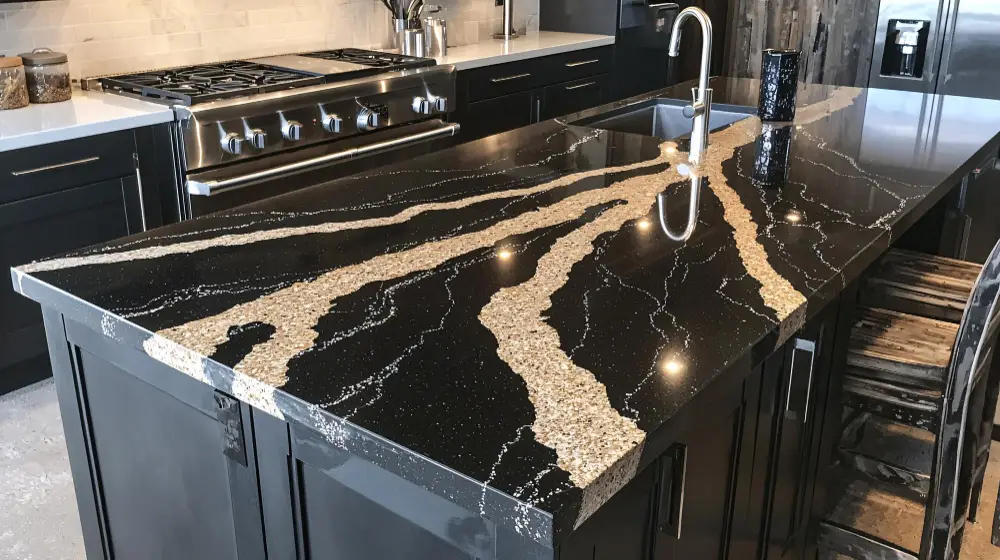
Stand in any countertop showroom long enough and you will hear the same debate at every island: quartz vs granite countertops, and which one deserves the biggest surface in the kitchen. Both materials dominate the market for good reason, both look beautiful, and both cost real money, which is why the decision generates so much research and so many opinions. The honest answer is that neither is better in the absolute. Each wins on different measures, and the right choice depends on how your household cooks, cleans, and lives. Quartz brings engineered consistency and near-zero maintenance. Granite brings natural, one-of-a-kind stone and heat tolerance quartz cannot match. This guide compares them measure by measure, from durability and maintenance through cost and resale, so the decision gets made on facts instead of showroom momentum.
The Problem: The Two Materials Get Confused Constantly
The confusion starts with the names. Granite is natural stone, quarried in slabs, cut and polished, with every slab different because geology made it. Quartz countertops are engineered, made from roughly 90 percent ground natural quartz mineral bound with resins and pigments, manufactured into slabs with controlled patterns and colors. Both get called stone, both arrive as slabs, and both install the same way, which lets the differences hide until after purchase.
The differences matter in daily life. The resin in quartz is what makes it non-porous and maintenance-free, and also what makes it vulnerable to high heat. The natural structure of granite is what makes it heat-proof and singular, and also what makes it porous enough to need sealing. Homeowners who choose without knowing those trade-offs end up with scorch marks on quartz or wine stains on unsealed granite, both avoidable with a match between material and household. The comparison below covers each measure that should drive the match.
[TRUST BADGES: licensed and insured, kitchen remodeling specialists, countertop selection guidance included]
Appearance: Consistency Versus Character
Quartz offers control. Because the patterns are manufactured, the slab you see in the showroom is the slab you get, colors run uniform across the whole kitchen, and the current design catalog covers everything from solid whites through convincing marble looks with dramatic veining. For homeowners matching a specific design vision, quartz delivers it exactly.
Granite offers singularity. Every slab is a one-off, with mineral movement and depth that manufacturing has not fully replicated, and buyers typically visit the stone yard to pick their exact slab. The trade-off is inherent: the sample in the showroom approximates but never matches the slab, and large kitchens may need seams between slabs that do not pattern-match perfectly. Households drawn to natural materials tend to find that character worth the variability.
Durability & Daily Life: Where Each One Wins
Scratches, Chips, & Impacts
Both materials rank among the hardest surfaces in the house, and both resist scratching well enough that knives dull before counters scratch. Granite edges more brittle at corners and sink cutouts, where chips happen, though they can be repaired. Quartz’s resin content gives it slight flex that resists chipping. Call this measure close to even, with a slight edge to quartz.
Heat Tolerance
Granite wins outright. Formed by heat, it takes hot pans directly without damage. Quartz’s resins scorch and discolor starting around 300 degrees, which means trivets are mandatory, and the burn marks are permanent. Households that cook hard and set pans down without thinking should weigh this heavily.
Stains & Porosity
Quartz wins outright. Non-porous through and through, it shrugs off wine, coffee, oil, and juice with a wipe, and it never needs sealing. Granite is porous, and unsealed granite absorbs stains. Sealing solves it, and modern sealers last years, but the maintenance duty is real and it belongs to the homeowner.
Cleaning & Hygiene
Quartz takes soap and water and nothing else required. Granite takes soap and water plus the sealing schedule, and its pores make it slightly less hygienic when the seal wears. For busy households that will never remember to reseal, this measure alone often decides the debate.
[BEFORE/AFTER GALLERY: kitchen before, then finished with quartz counters, and a second project finished with granite]
Cost Comparison: Closer Than the Reputation Suggests
Granite carries an old reputation as the premium buy and quartz as the upstart, and the market has erased most of that gap. The table below reflects installed pricing in the Central Illinois market.
| Measure | Quartz | Granite |
| Installed cost per square foot | $60 to $120 | $50 to $110 |
| Typical kitchen (45 sq ft installed) | $2,700 to $5,400 | $2,250 to $4,950 |
| Entry-level options | $55 to $70 per sq ft | $45 to $60 per sq ft |
| Premium and designer lines | $100 to $150+ per sq ft | $90 to $140+ per sq ft |
| Sealing over 10 years | $0 | $0 to $500, or DIY hours |
| Repair of chips or burns | Burns difficult to repair | Chips repairable by pros |
| Lifespan | 25+ years | 30+ years, effectively lifetime |
Read the table honestly and the cost verdict is a tie shaped by selection. Entry granite undercuts entry quartz, premium lines of both reach similar heights, and the ten-year ownership costs land within a few hundred dollars. Price should break ties in this decision, not drive it.
Resale, Trends, & the Long View
Both materials read as premium to buyers, and both outperform laminate and tile in any appraisal conversation. The trend line currently favors quartz, which has taken the majority of new kitchen installations nationally, driven by the maintenance-free pitch and the white-and-gray palettes dominating kitchen design. Granite holds strong in markets and households that value natural materials, and its singularity ages outside of trends in a way manufactured patterns may not.
For Pekin-area homeowners thinking resale, the practical answer is that either material in good condition helps sell a kitchen, and the layout, cabinets, and overall renovation quality around the counters matter more than which stone won the debate.
How to Decide for Your Household
The decision usually falls out of three questions. First, how does your kitchen get used: hard-cooking households that set down hot pans lean granite, busy households that want zero maintenance lean quartz. Second, what does the design want: exact color control and marble looks lean quartz, natural depth and a one-of-a-kind slab lean granite. Third, who maintains it: if resealing will never happen, quartz protects you from your own calendar.
Bring the finalists home before committing. Full-size samples on the actual cabinets under the actual lighting settle debates that showrooms start, and any good kitchen contractor builds that sampling step into the selection process.
[FINANCING CTA BANNER: kitchen remodel financing covers counters, cabinets, and the whole project]
Frequently Asked Questions
Is quartz or granite more expensive?
They overlap almost completely, with installed pricing for both running roughly $50 to $120 per square foot in this market. Entry granite runs slightly cheaper than entry quartz, premium lines of both climb similarly, and ten-year ownership costs land close once granite sealing is counted.
Which lasts longer, quartz or granite?
Both outlast the kitchens around them, with granite effectively a lifetime material and quartz rated for 25 years and up. The practical difference is failure mode: granite chips can be repaired, while quartz burn marks generally cannot, so household habits matter more than the lifespan ratings.
Can you put hot pans on quartz countertops?
No. The resins in quartz scorch and discolor starting around 300 degrees, and the marks are permanent. Granite takes hot cookware directly without damage, which is its clearest daily-life advantage for serious cooks.
Does granite really need to be sealed?
Yes, because natural granite is porous and absorbs stains without a seal. Modern sealers applied at installation last several years, resealing is a simple afternoon task, and the water-bead test tells you when it is due. Households that will never do it should choose quartz.
Which is better for resale, quartz or granite?
Both read as premium surfaces to buyers and appraisers, and neither will hurt a sale in good condition. Quartz currently leads national installation share and matches trending kitchen palettes, while granite’s natural character holds durable appeal. The kitchen around the counters influences resale more than the choice between them.
Related Reading & Services
- Kitchen Remodeling services
- [Kitchen Remodel Timeline: How Long the Project Really Takes](INTERNAL LINK: kitchen remodel timeline blog)
- [Best Flooring Options for Kitchens](INTERNAL LINK: kitchen flooring options blog)
- [Best Time of Year to Remodel Your Kitchen](INTERNAL LINK: best time to remodel kitchen blog)
[REVIEW SNIPPET: homeowner quote about countertop selection guidance during their kitchen remodel, with first name and town]
Settle the Great Countertop Debate in Your Own Kitchen
Quartz and granite both deserve their popularity, and the winner in your kitchen depends on how your household cooks, cleans, and plans to live with the surface for the next twenty years. If you are weighing counters as part of a kitchen project in Pekin, East Peoria, Morton, Washington, or the surrounding Central Illinois area, our team brings the samples, the honest trade-offs, and the installation experience to make either choice look like it was always meant to be there. Request your free estimate or call (309) 241-9593 and let’s find your slab.